Dive into the first issue of our “Decryptage” series and let yourself be guided through the works that will shape this 33rd edition.
To kick off the series, discover Messiaen’s majestic Turangalîla-Symphonie, performed by Esa-Pekka Salonen at the Inaugural concert. A true masterpiece, brought to life by the vision and expertise of the Finnish conductor, a leading specialist in 20th-century music.
From Mexico to Bali aboard Messiaen’s vast, multi-coloured orchestra
By Antonin Scherrer
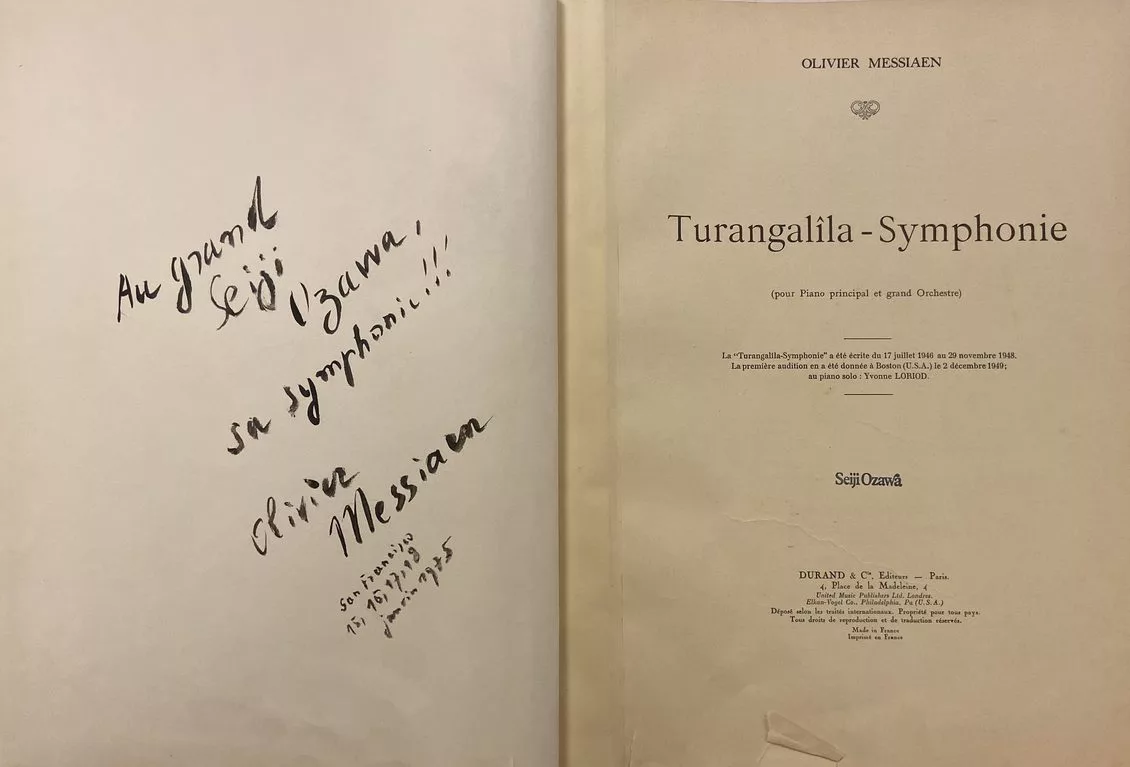
Eighty minutes of music shaped by 103 performers, including 68 string players and a forest of percussion: the very rarely performed Turangalîla-Symphonie by the French composer Olivier Messiaen (1908–1992) is a world unto itself, deliberately excessive.
A marvelous journey, driven by the richest instrumentation imaginable: a meeting point between East and West, between the great “classical” orchestra and the Balinese gamelan. Messiaen discovered this traditional ensemble with its exotic rhythms during his conservatory years, thanks in particular to the teaching of Maurice Emmanuel, a brilliant professor of music history who instilled in him a passion for ancient Greek rhythms and non-European modes. Here, he brings it to life through a profusion of keyboards and percussion, instruments worth dwelling on for a moment, as they are rarely encountered on “classical” stages and shape the entire work.
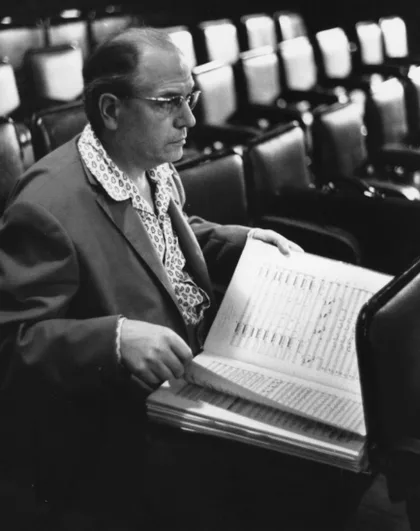
“A colossal symphony where percussion, colors, and dreams blend East and West to celebrate love, life, and the dizzying wonder of the world.”
Percussion and poetry
Composed between 1946 and 1948 for Serge Koussevitzky and his Boston Orchestra—an exceptional patron was needed to take on such a challenge!—this extraordinary Symphony also aspires to poetry. As the composer explains, the key lies in the very title of the work, borrowed from Sanskrit: “Turangalîla means, all at once, love song, hymn to joy, time, movement, rhythm, life and death.”
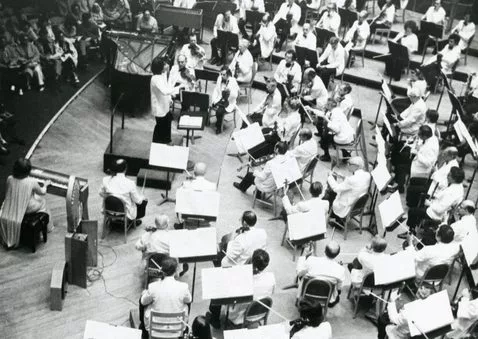
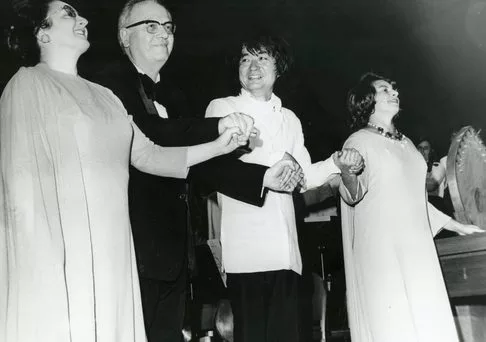
This dreamlike dimension is reflected in the richly evocative titles of the work’s ten movements, and also in the four cyclical themes that underpin the whole—answering one another, opposing one another or intertwining: the “flower theme”, the “chord theme”, the “love theme” and, to set everything in motion, the “statue theme” played by the trombones fortissimo which—Messiaen tells us—has “the heavy, terrifying brutality of old Mexican monuments [and] has always evoked for me some terrible and fatal statue”. From Mayan remains in Central America to the ageless orchestras of the Indonesian archipelago: a true journey around the world!
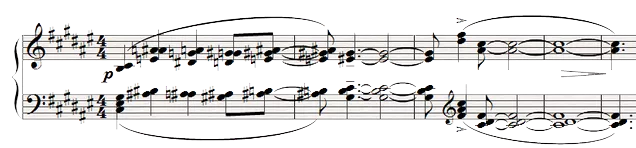
Within the keyboard family, Messiaen calls for the bright, piercing sound of the glockenspiel, which he combines with the celesta, well known to music lovers for its iconic use in the “Dance of the Sugar Plum Fairy” from Tchaikovsky’s The Nutcracker. Also known as a “keyboard glockenspiel,” the instrument consists of steel bars struck by hammers, usually activated by a keyboard, placing it at the crossroads between the two families.
The vibraphone, which completes the picture, is no exception: a kind of xylophone made of metal bars and resonating tubes, it too oscillates between the world of notes and that of impulses. The percussion section, however, is by no means left behind—far from it! The Turangalîla-Symphonie uses it with remarkable exuberance. Just consider the array: temple blocks, wood blocks, small Turkish cymbals, Chinese cymbals, tam-tam, tambourine, maracas, Provençal drum, snare drum, bass drum, tubular bells… it would be hard to assemble a more generous palette. All deployed not only to transport the listener, but above all to explore new combinations.
Do you know the Ondes Martenot?
To crown it all: two solo instruments, like the themes, built on contrast. On one side, the indispensable piano (played by Messiaen’s wife, Yvonne Loriod, at the world premiere on December 2, 1949, in Boston under the baton of Leonard Bernstein); on the other, the spectacular yet all-too-rare ondes Martenot (brought to life that day by Ginette Martenot, sister of their inventor). A pioneering electronic keyboard instrument, patented in 1922 by Maurice Martenot—who discovered its principle while working as a radio operator during the First World War—and first presented to the public in 1928, its extraordinary sound alone is worth the journey.
Under the baton of Esa-Pekka Salonen, an expert in 20th-century music
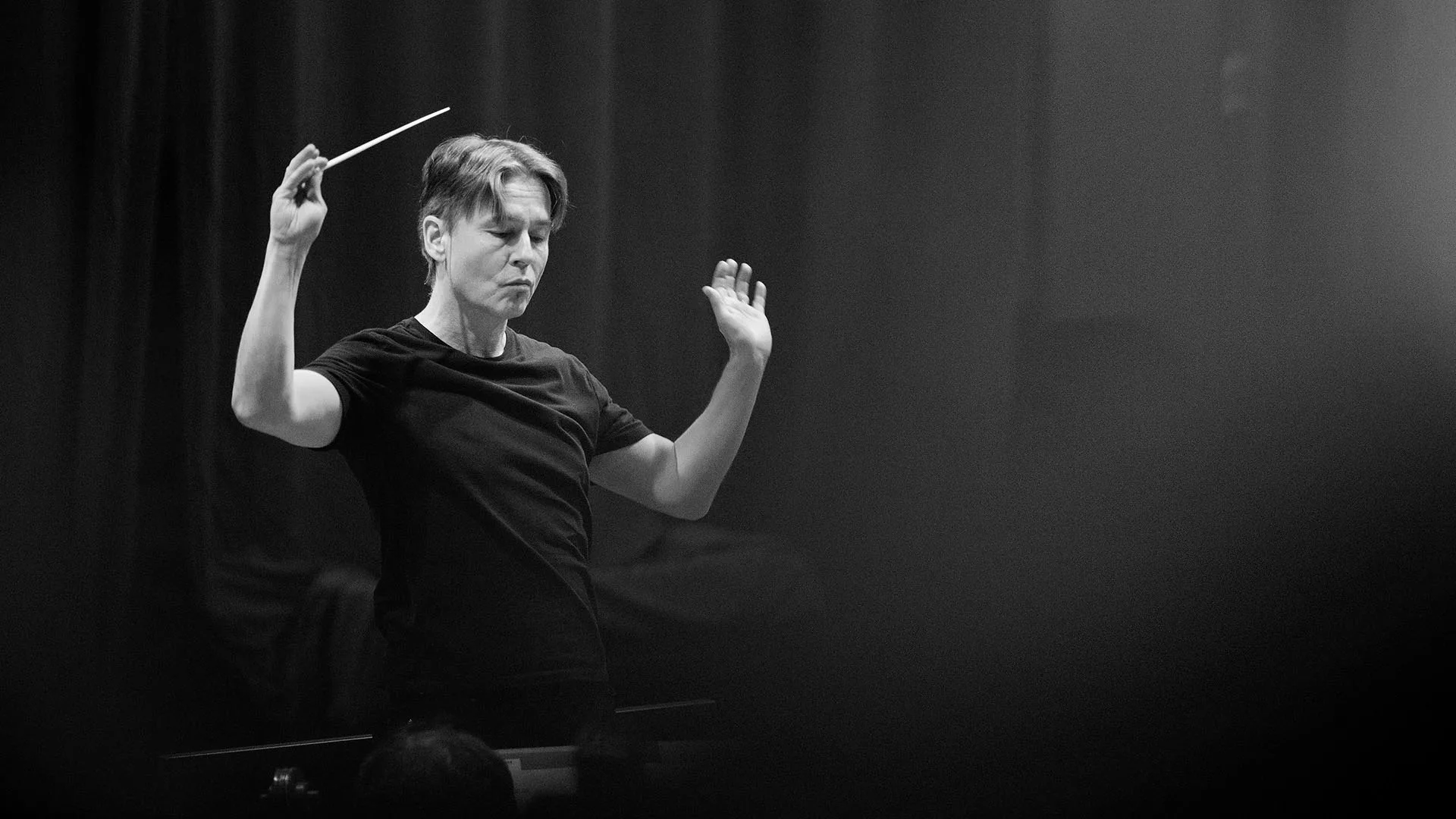
The audience, along with the musicians of the Verbier Festival, will have the privilege of experiencing this masterpiece under the baton of a conductor ideal for this repertoire and this particular work: the Finnish Esa-Pekka Salonen. A composer himself and a proud product of the legendary Jorma Panula class in Helsinki, he led the Los Angeles Philharmonic for over fifteen years and has collaborated regularly with the San Francisco Symphony. He has also recently been appointed music director of the Orchestre de Paris, effective from the 2027/2028 season.
Learn more about Olivier Messiaen
Olivier Messiaen speaks of his interest in birdsong and how he drew inspiration from it for his compositions.
Olivier Messiaen shares his passion for Debussy’s music.
 Friday 17 July 2026 18:30 to 20:45
 Salle Des Combins