1789. Three years after the runaway success of Le nozze di Figaro — and two years after the darker, more tragic Don Giovanni — Mozart and his librettist Lorenzo da Ponte were ready to complete what would become one of opera’s greatest trilogies. The spark came from an unlikely source: Emperor Joseph II himself, a devoted fan of Le nozze, who suggested they set to music a scandal then doing the rounds in Viennese society. Two officers, posted in Trieste, had allegedly swapped their wives. It would make the perfect comic opera. It would become Così fan tutte.
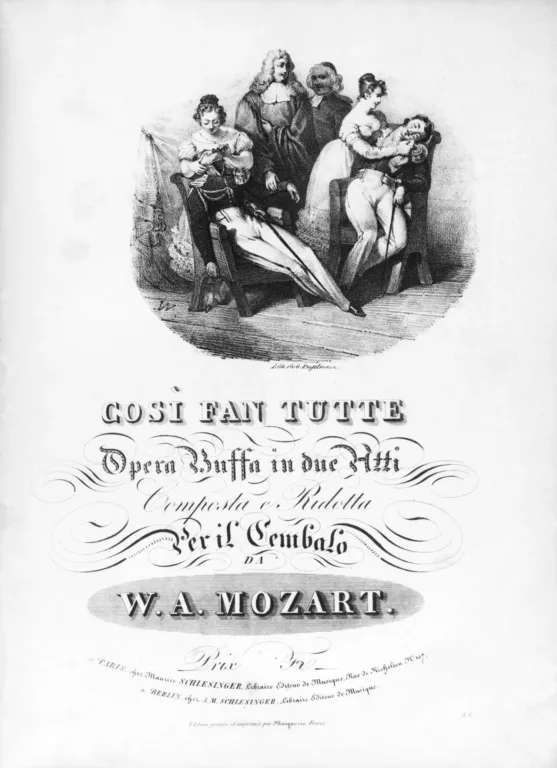 First page of the score of Mozart’s Così fan tutte — ©Getty – Bettmann / Contributor
Women, perhaps… but men even more so!
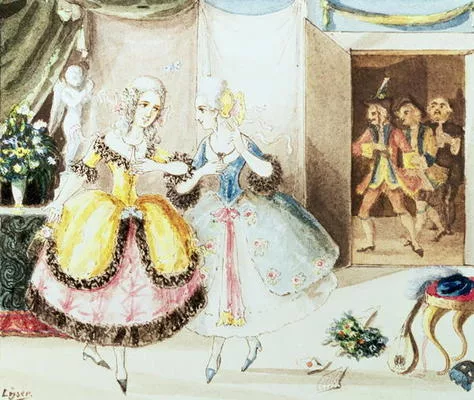
Characters from Mozart’s Così fan tutte, watercolour by Johann Peter Lyser, 1840.
The moral of the story — that women are “all the same”, all equally fickle — was, according to Mozart’s biographer Jean-Victor Hocquard, exactly the “kind of thing Da Ponte relished”. Mozart was another matter entirely. He “could not accept this lack of respect for women,” Hocquard writes, and “held nothing but contempt for male self-satisfaction.”
He took the commission because it came from the Court. But he had a plan. Without telling Da Ponte — who would never have agreed — Mozart quietly embedded a series of bold musical choices designed to turn the opera’s smug moral on its head. By the end, così fan tutte had become così fan tutti: thus do they all. Men included. Perhaps more so…
A world of double meanings
Both men surpassed themselves. Da Ponte, a Venetian who knew every twist and turn of human desire, delivered a libretto steeped in irony and ambiguity — the comic tradition at its most refined. Mozart matched him at every level, and then some. His score operates on multiple planes simultaneously: duets, ensembles, and an orchestra that constantly adds layers of insinuation the words alone don’t carry. At times he even manages to outmanoeuvre Da Ponte within his own libretto — most notably in the duet Fra gli amplessi, where Ferrando begins by feigning a declaration of love to Fiordiligi as the script demands, only to find himself meaning every word of it.
It is the music — Mozart — that makes this happen, not the text. Only the most attentive ears will catch it. And the whole opera was written in under a month!
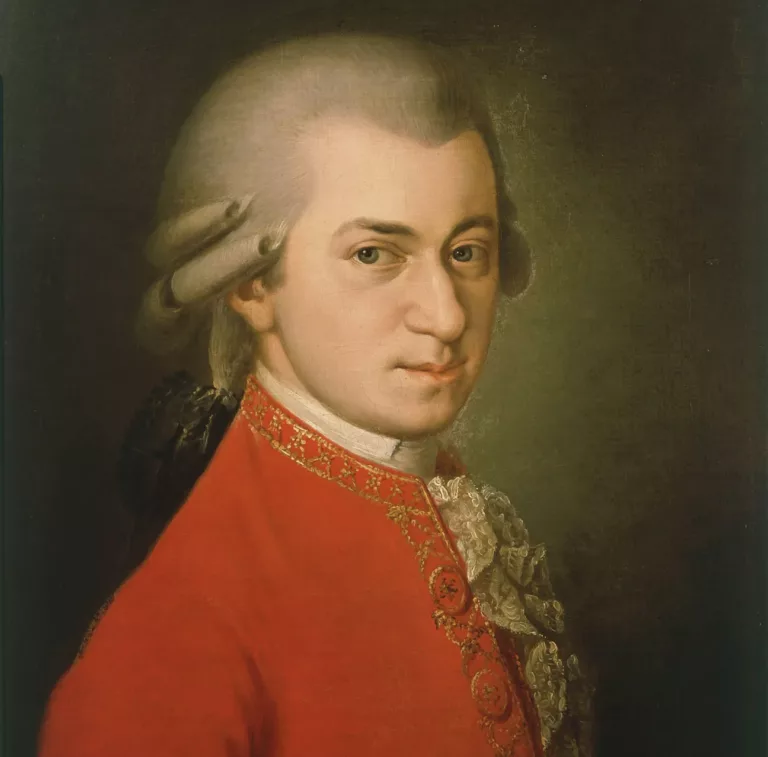
Wolfgang Amadeus Mozart, oil on canvas by Barbara Krafft, 1819.
“Human nature is what it is — fragile, unstable, defenceless.”
Renata Leydi
The plot, in brief
In his book Opera: A User’s Guide, Alain Perroux sums up the plot in a few deft strokes: “Guglielmo loves Fiordiligi. Ferrando loves Dorabella. The two officers bet the cynical philosopher Don Alfonso that their fiancées are the very picture of fidelity. To test this, they fake a departure to war, return in disguise as Albanian strangers, and proceed to court each other’s partners.” The women resist… until they don’t. Così fan tutte — thus do they all. But as scholar Alain Perroux notes: “Behind the mask, true desires emerge…”
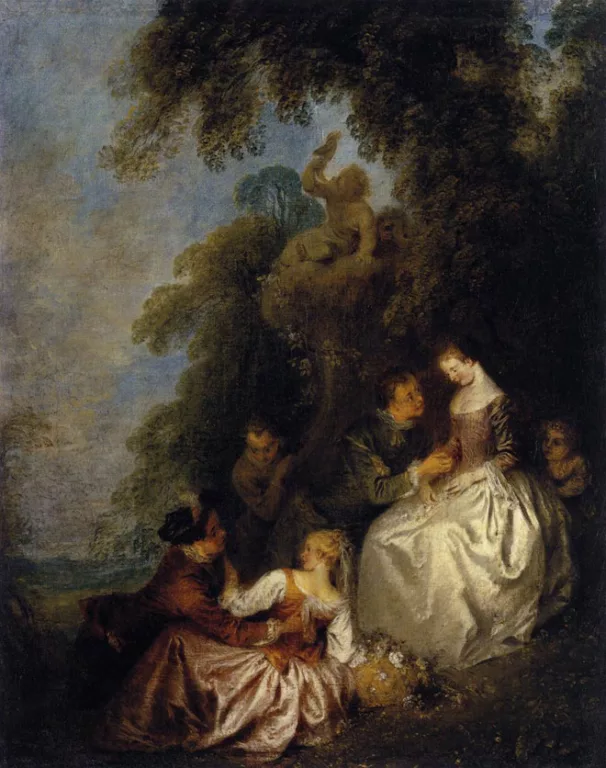
Gallant conversation, painting by Jean-Baptiste Pater, between 1720 and 1723. © Musée du Louvre
Too subtle for its time
Those true desires sailed completely over the heads of 19th-century audiences (Beethoven among them) who saw in Così nothing but immorality and implausibility, and promptly consigned it to the margins of the repertoire, where it remained for the better part of a century. It had started well enough: the premiere on 26 January 1790 at Vienna’s Burgtheater was warmly received, with four further performances following in quick succession. Then the emperor died. Every theatre in the city closed overnight, and when they reopened, newer works had taken Così‘s place. It never recovered — not until the 20th century brought audiences willing to look beneath the surface.
What they found there was something quietly devastating. As musicologist Renata Leydi writes, Mozart’s music “plays consciously with the characters without taking them seriously, an ambiguous game of trivial and sincere feelings, behind which the most elementary human instincts repeatedly surface. Behind the mask, the human being appears.” A rich subject for meditation… beyond the laughter and the comic entanglements!
The ideal baton to close the trilogy
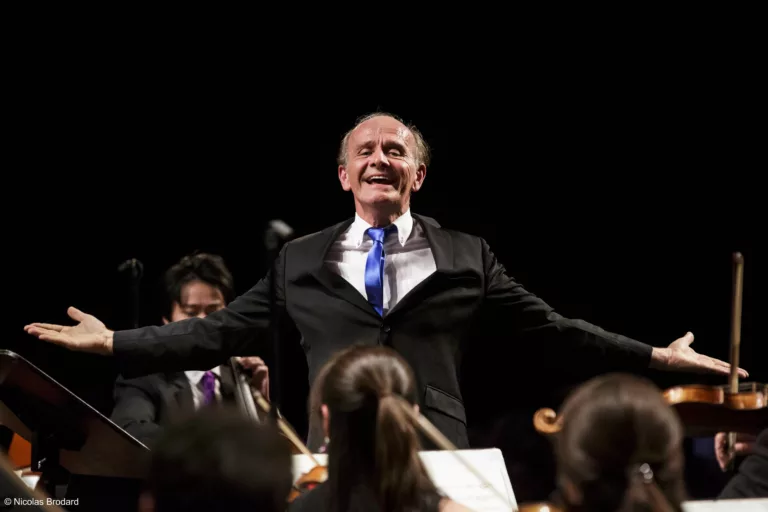
No conductor is better placed to bring Così to Verbier than Gábor Takács-Nagy, who triumphed here with Don Giovanni in 2022 and Le nozze di Figaro in 2024. The music director of the Verbier Festival Chamber Orchestra (VFCO) completes his “Mozart-Da Ponte cycle” with a cast to match: real-life sisters Johanna and Rebecka Wallroth as Fiordiligi and Dorabella, Opus Klassik’s Singer of the Year Konstantin Krimmel, and the incomparable Bryn Terfel as Don Alfonso, back at Verbier after last summer’s success in Gianni Schicchi. One couldn’t dream of a finer opening night for the VFCO’s 20th anniversary celebrations!
BUY TICKETSLe nozze di Figaro, K. 492: Overture
With Gábor Takács-Nagy and the Verbier Festival Chamber Orchestra,
Verbier Festival 2024.