“Bluebeard’s Castle”, between reinvented folklore and a reflection on the couple
Béla Bartók, father of modern ethnomusicology? The label is justified: in the early years of the 20th century, Bartók and his compatriot Zoltán Kodály travelled through the Hungarian and Romanian countryside to collect and transcribe popular melodies passed down by word of mouth for generations. Far from a quest for exotic flavours (in the manner of a Ravel or a Debussy drawing on the rhythms and colours of Spain or Java), this was a profound patriotic commitment: to save from oblivion a fragile culture, marginalised within a stifling empire.
A pioneer of ethnomusicology
Bartók was born in 1881 in the Austro-Hungarian Banat, a region known for its hostility to the Habsburgs, where several cultures converged: Magyar, Romanian and Slovak. His training at the Royal Academy of Budapest remained deeply marked by the Germanic legacy. His composition teacher, Hans von Koessler, was German, and his early works sound like Brahms.
Yet as early as 1902, he unhesitatingly embraced the Hungarian nationalist movement. “It was said that we had to create something specifically national in music as well,” he would recall twenty years later. “That movement led me, too, to turn my attention to the study of our folk music—or rather, to what was then considered Magyar folk music.”
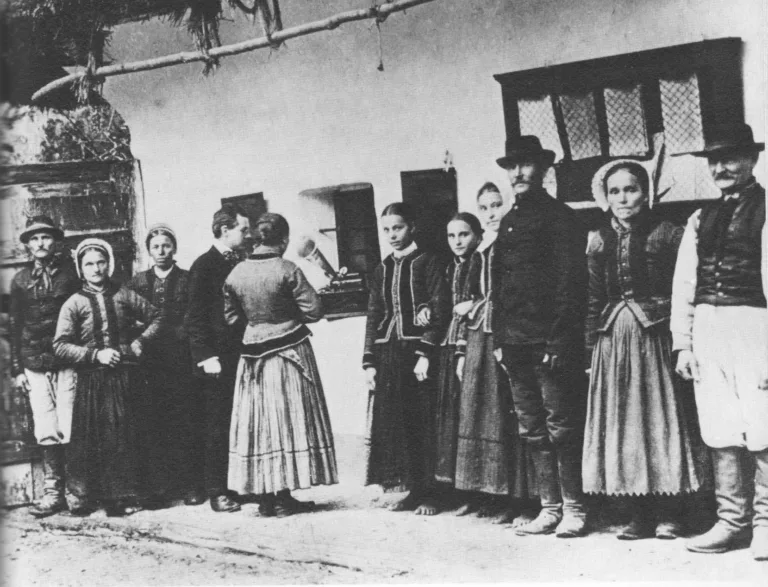
© Bartók recording folk songs on a phonograph in Darázs
Perrault in Transylvania
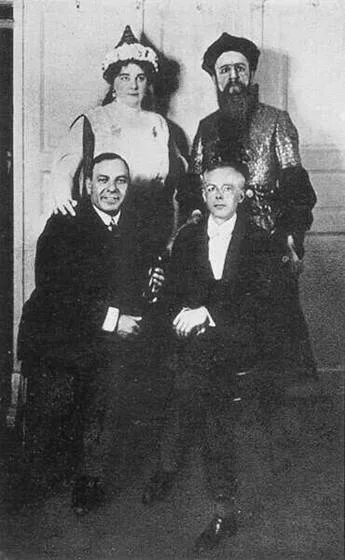
© Olga Haselbeck (Judith), Oszkár Kálmán (Bluebeard), Dezső Zádor and Béla Bartók after the premiere of Bluebeard’s Castle in 1918
While he does not bear a specifically “folklorist” label and does not deny the influence of Pelléas et Mélisande by Claude Debussy on his composition, Bartók carries that same identity-driven vein into Bluebeard’s Castle. Musically, it is expressed through a modal language with pentatonic scales typical of Hungarian folk traditions. Dramaturgically, it takes the form of a descent into the age-old world of Transylvanian ballads. The libretto, by Béla Balázs, traces a long lineage: Maeterlinck’s poem Ariane et Barbe-Bleue, set to music by Paul Dukas in the early 1900s, itself inherited from Perrault’s tale Bluebeard, published in 1697.
The result is truly striking: the only opera composed by Bartók brings together, in a single act of around an hour, two protagonists—Bluebeard (baritone) and Judith (mezzo-soprano)—as well as a bard-narrator to set the scene by way of a prologue.
From Ariane to Judith
Premiered on 24 May 1918 at the Budapest Opera, the work immediately stands out for the many liberties it takes with Perrault’s original—and even with Maeterlinck’s poem, which Béla Balázs nevertheless claims as the anchor point for his libretto. Before setting to work in 1910, the playwright had in fact travelled to Paris to attend, on 10 May 1907, the premiere of Ariane et Barbe-Bleue by Dukas, accompanied by Zoltán Kodály. He returned determined to follow in the footsteps of his Belgian counterpart, initially even proposing that Kodály write the music. While he certainly retains from Maeterlinck this major choice—presenting Bluebeard’s wives not as murdered, as in Perrault, but shut away behind seven doors—the couple nevertheless appears in a very different dynamic.
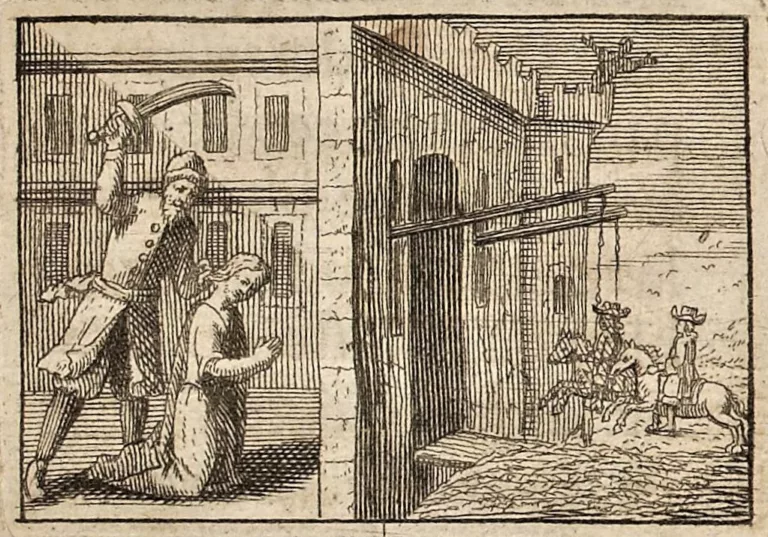 © Copper engraving by Antoine Clouzier. Illustration adorning the original edition of Mother Goose Tales by Charles Perrault, 1697.
Bluebeard in love
Almost absent in Maeterlinck, the husband is here the central character of the opera, with a far more generous face than in earlier portrayals: out of love for Judith, he tries to rein in a curiosity that could prove fatal to him. Judith, for her part, appears in a less virginal light—that of a woman who, by ignoring her husband’s repeated warnings, shatters marital fidelity. But since nothing in love is ever simple, one wonders at the same time whether such curiosity is not legitimate when one has feelings.
Is it not that same love which, for her too, guides the steps of her dangerous exploration: the desire to know the other’s soul down to its darkest corners?
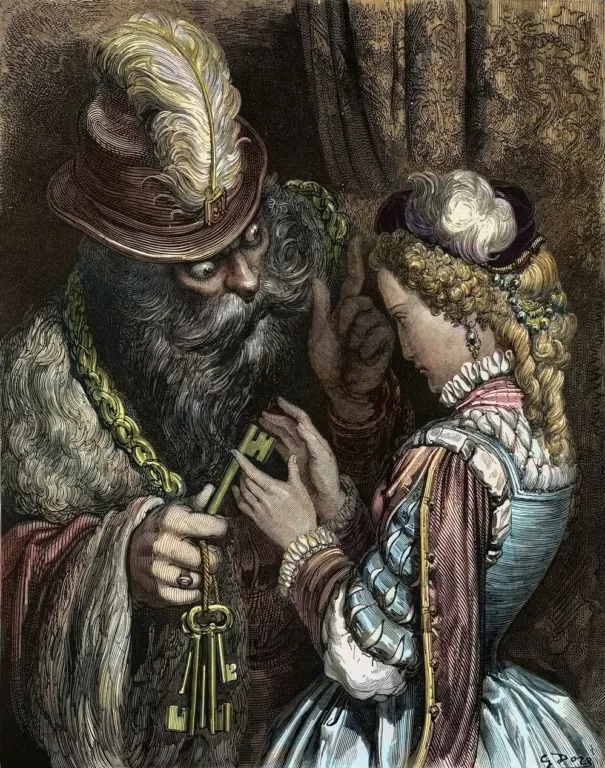
© Hand-coloured engraving of Bluebeard, published in Perrault’s Tales, drawings by Gustave Doré, 1862.
Simon Rattle’s passion
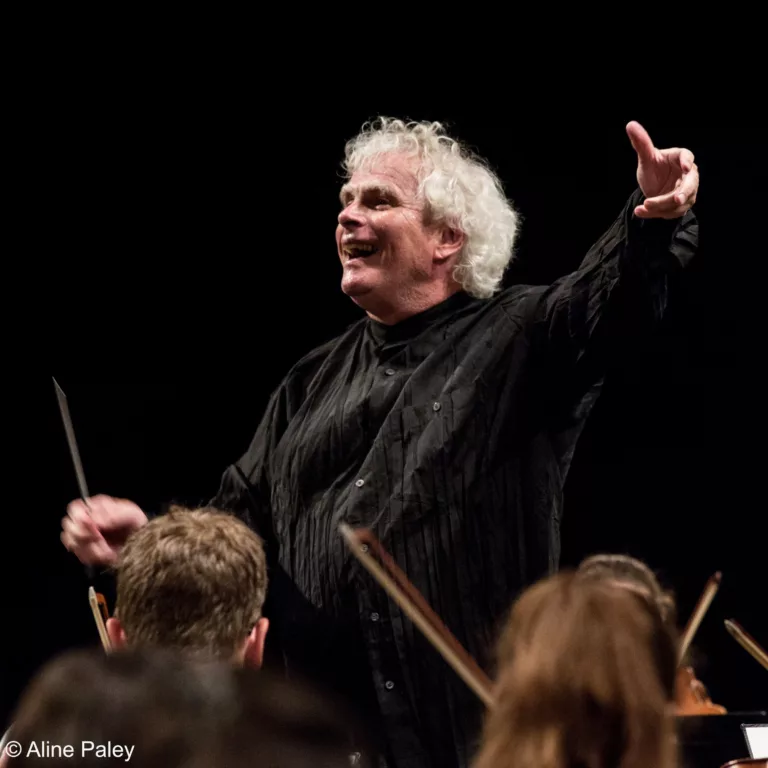
To bring this masterpiece to Verbier Festival audiences: a man in one of his favourite repertoires, the British conductor Sir Simon Rattle. At the helm of the Verbier Festival Chamber Orchestra, he will set the tone for his wife Magdalena Kožená—renowned for her interpretations of Janáček and Mahler—and for a Bluebeard portrayed by Gerald Finley, who will make his Verbier debut this summer. The ideal artists to convey the depth of this libretto, so magnificently rooted in its time!

 Friday 24 July 2026, 18:30 to 20:30
 Salle Des Combins