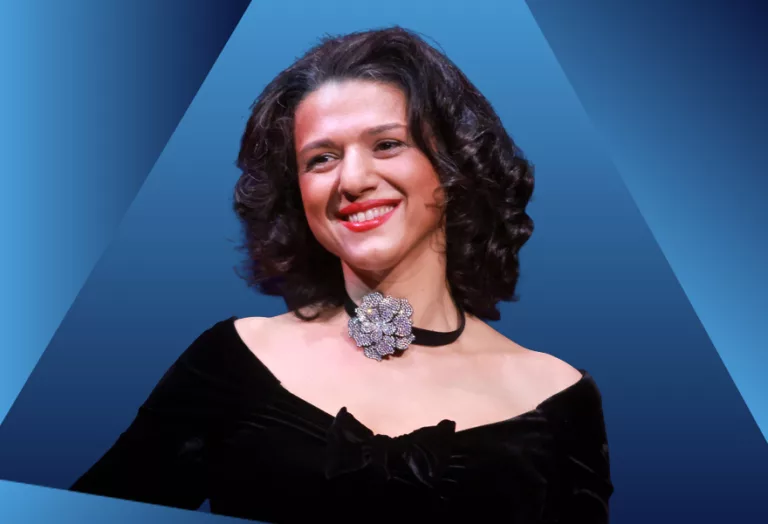
EKATERINA BONYUSHKINA

At 23, Ekaterina Bonyushkina is already destined for a brilliant career. She was one of last year's audience favourites and a true revelation of the Verbier Festival. A former Academy student in 2024, she now studies piano with Nelson Goerner and Rena Shereshevskaya and has made her name in virtuoso repertoire, which you will have the pleasure of discovering on 18 July.
Program
LUDWIG VAN BEETHOVEN (1770–1827)
Piano Sonata No. 31 in A-flat Major Op. 110
FRANZ SCHUBERT (1797–1828)
Fantasie in C Major D. 760 “Wanderer Fantasy”
Interval
NIKOLAI MEDTNER (1880–1951)
Fairy Tales (Skazki) – selection
- Op. 34 No. 4 “Once upon a time there was a poor knight”
- Op. 51 Nos. 1, 3, 4 & 6 – dedicated to Cinderella and to Ivanushka the Fool
- Op. 48 No. 1 “Dance-Tale”
- Op. 48 No. 2 “Dance of the Elves”
FRÉDÉRIC CHOPIN (1810–1849)
Ballade No. 4 in F minor Op. 52
Ekaterina Bonyushkina plays Kapustin’s Variations, Op. 41
Among Beethoven’s last works for piano, the Piano Sonata No. 31 spans the full range of emotion, from utter despair to triumphant joy.
Composed around the same time, Schubert’s famous “Wanderer Fantasy” takes its name from another of the composer’s pieces, the lied Der Wanderer, whose theme carries through all four movements without a break. It is technically very demanding, anticipating the cyclical, single-theme structure that would come into its own with Liszt.
A contemporary and friend of Rachmaninoff, Medtner composed a great many Fairy Tales over the course of his career: these short narrative pieces, steeped in Russian folk motifs, revealing a pianistic world as refined as it is little known.