Verbier is easily accessible by various means of transport.
Where to stay
Explore available accommodation options in Verbier.
Eat & drink
Explore a selection of places to eat or drink during your visit to Verbier.
Venues & Accessibility
Learn more about our performance venues and accessibility.
Your experience at the Verbier Festival
We value your feedback. Share it with us here.
Offers
Flex Pack
20% discount starting 7 concerts purchased from the Mainstage programme (excluding Carré Or).
Day Pass
10% discount when you book 2 or more concerts on the same day.
Combins Pass
Attend all evening concerts at Salle des Combins (Carré Or) from the 16th of July 2025 to the 2rd of August 2025. Contact the Ticket Office to buy your Pass.
Gift card
Share your passion for classical music by offering a Verbier Festival gift card.
Bagnard
40% discount for permanent residents of Commune de Val de Bagnes.
Under 35
For adults under 35 years old for all Mainstage concerts.
Students
For students upon presentation of valide ID for all Mainstage concerts.
Children
For children under 12 for all Mainstage concerts.
The Verbier Generation
At the heart of the Festival's mission: nurturing the next generation of great artists.
Academy Programme
From musical training to musicpreneurship - empowering young musicians to embrace their artistry and forge meaningful careers in music
Masterclasses Shenzhen 2026
In China, a week of masterclasses with artists of the Verbier Festival.
Masterclasses Verbier 2026
Programme at a glance - Masterclasses are among the Festival's most popular events.
Students 2026
Discover the students of the Academy, Orchestra Training programmes and Shenzhen masterclasses
Prizes & Honours
Celebrating the Academy's most outstanding talents, including the Prix Yves Paternot - its most prestigious distinction.
Success Stories
Meet alumni making their mark.
The Verbier Generation
At the heart of the Festival's mission: nurturing the next generation of great artists.
Orchestra Training Programmes
The Verbier Festival Orchestra Training Programmes have become a rite of passage for today's exceptional young orchestral musicians and conductors.
Students 2026
Discover the students in the orchestra training programs
Success Stories
Meet alumni making their mark.
VFCO
The Verbier Festival Chamber Orchestra, the Festival’s worldwide ambassador, unites exceptional alumni of its Orchestra Training Programmes who now perform with some of the world’s leading orchestras.
Summer 2026
Your summer of unlimited music starts with these concerts.
Buskers 2026
Calling all street performers! Apply now to play at next summer's Verbier Festival.
Aftermovie 2025
Relive the energy, the music and the moments that made UNLTD 2025 shine.
UNLTD Collective
Alumni of the Verbier Festival Academy creating bold, original projects for today.
Amplifiers
Join the community that helps UNLTD spark new sounds and ideas.
Summer 2026
Concerts, workshops and outdoor fun for children during the Verbier Festival.
Storytellers in the Classroom
A journey through words, music and images to dream and create.
Drawing Contest
A creative contest inviting children to draw through music.
Zoo
Short animated films inspired by The Carnival of the Animals.
Ludwig's World
An interactive playspace to discover Beethoven.
Amplifiers
Amplifiers help VF KiDS grow and keep the magic of music alive.
Verbier Festival Gold
Gems from the Festival archives.
VF Collection
An ambitious heritage project that extends our artistic mission beyond the summer season.
Virtual Hall®
The Verbier Festival presents its first virtual reality experience, in partnership with Cybel’Art.
Jukebox
An immersive audiovisual space for archival treasures.
Broadcast and Streaming
The Verbier Festival lets music-lovers worldwide enjoy concerts live or on replay.
Apple Music Classical
The Verbier Festival is pleased to announce its partnership with Apple Music Classical.
Public Funders
The Verbier Festival thanks its public funding partners for their unwavering support.
Our Sponsors
The Verbier Festival thanks its sponsors and partners for their valuable support.
The Entrepreneurs’ Circle
The Entrepreneurs’ Circle aims to become the Verbier Festival’s economic partner network.
Cercle des Combins
The Cercle des Combins connects the people who make our local economy thrive in a truly authentic setting.
Donors to the Friends
The Friends is a group of music-loving donors whose support has been a cornerstone of the Festival’s rise to the top.
Become a Friend
Become a Friend and enjoy numerous benefits to fully experience the Verbier Festival.
Patrons
The Verbier Festival is grateful to its philanthropic patrons for their generous support.
Legacy Giving
Help us build a sustainable future.
Founder & Director
En 1991, Martin Engstroem put the wheels in motion for what in 1994 would become the Verbier Festival & Academy.
Sustainability
Our Corporate Social Responsibility policy.
Contact
Our telephone numbers, email and postal addresses, office hours and directory of personnel.
Board of Directors
Learn more about the Verbier Festival's Board of Directors.
Your experience at the Verbier Festival
We value your feedback. Share it with us here.
深圳·韦尔比耶音乐节 2026
Verbier Festival 2026 Shenzhen
The inaugural Verbier Festival in Shenzhen: 30 January to 8 February 2026
What they say about us
The Festival as seen by the international press.
Press Enter to search
News Archive
Our past stories
Chen Kevin
16 Jun 2022
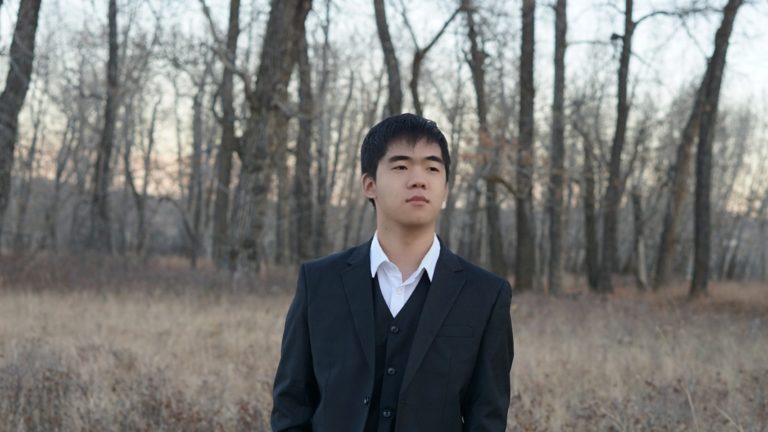
In 2013, Kevin Chen was listed in the Canadian Broadcasting Corporation’s “Top 30 Hot Canadian Classical Musicians Under 30.” He has won multiple international piano competitions, including the International Piano-e-Competition (2019), the Hilton Head International Piano Competition (2020), the Mozart International Piano Competition in Lugano, Switzerland (2020), and the Franz Liszt International Piano Competition in […]
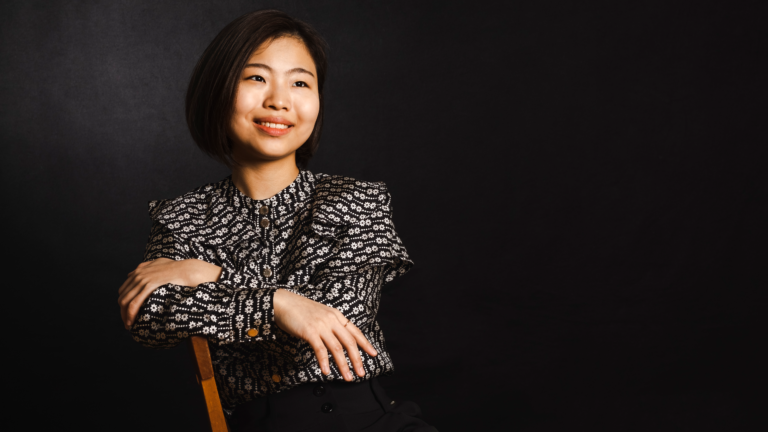
Yumeka Nakagawa is the 2021 Prix Clara Haskil recipient (Concours International de Piano Clara Haskil), as well as winner of the prestigious competition’s Audience Award and Children’s Corner Award. She was also the first prizewinner at the 2019 International Robert Schumann Competition (Düsseldorf) and second prizewinner at the International Franz Liszt Competition for Young Pianists […]
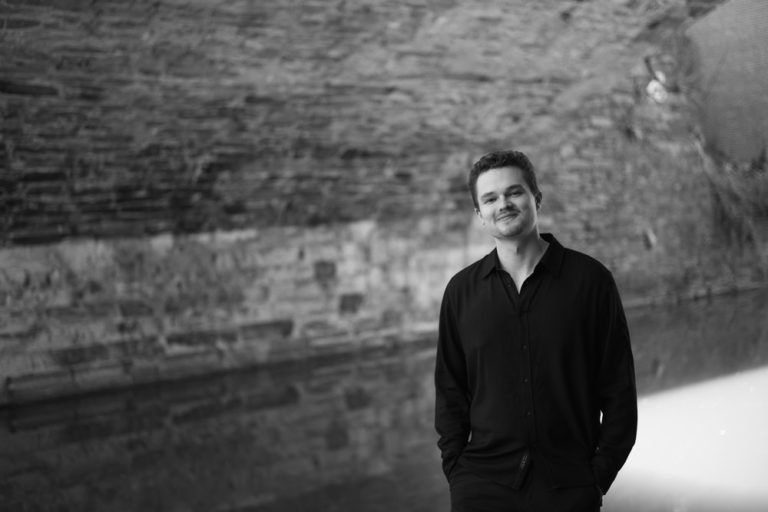
Michał Prószyński is a member of Bühnen Bern’s opera ensemble, as part of which he made his debuts as Pelléas in Debussy’s Pelléas et Mélisande and Mime in Wagner’s Das Rheingold. Born in Gdów, the Polish tenor studied at Hanover Hochschule für Musik, Theater und Medien with Marek Rzepka, who already supervised him at the […]
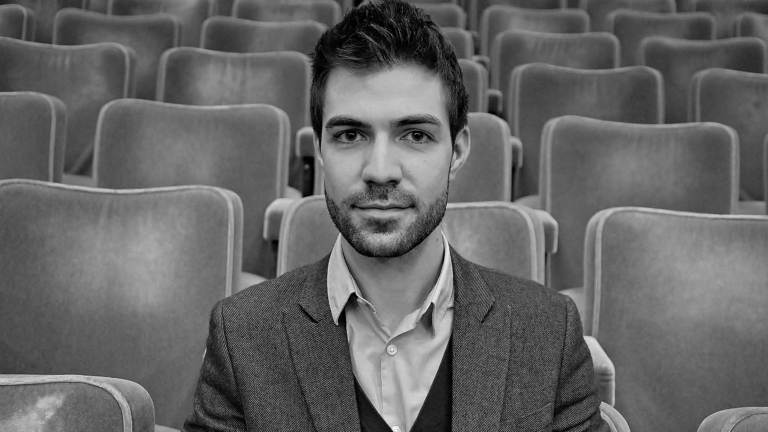
German baritone Dennis Chmelensky has been praised for his “carrying power as well as subtle sensitivity to sound” (Philadelphia Inquirer). He is a former member of the Washington National Opera’s Cafritz Young Artist Program and an alumus of the Curtis Institute of Music. This season, he made his debut at the Philips Collection with Beethoven’s […]
Daniel Barrett is a baritone from Glasgow who is in his first year on the master’s course at the Royal College of Music and studies with Russell Smythe. Daniel is a Drapers’ de Turckheim Scholar and a Drake Calleja Trust Scholar, as well as an associate artist with the Josephine Baker Trust. He previously studied […]
Lara Villanueva is a Maryland-based audio engineer and multi-instrumental musician known for her resourcefulness and attention to detail. Music and physics are two sides of the same coin, and Lara has always been intrigued by the relationship of sound with spaces. She has worked in a variety of environments ranging from studio and location recordings […]
Atena Carte is a pianist born in Timisoara, Romania. She graduated from the University of Music in Timisoara, where she studied with Maria Bodo. Later on she obtained Concert and Soloist Diplomas studying with Jean-François Antonioli at the Haute Ecole de Musique de Lausanne, and a Concert Diploma in Chamber Music with Ulrich Koella and […]
Sébastien Jurczys is a music director, pianist, composer, arranger and stage director. In 2011, he created his first multidisciplinary show with symphony orchestra, choirs and soloists (including Natacha Kowalski). He has also created numerous musical projects at the Le Moderne theatre with director Sarah Cerri (Le Cabaret des Hommes Perdus, Into the Woods, Once Upon a […]
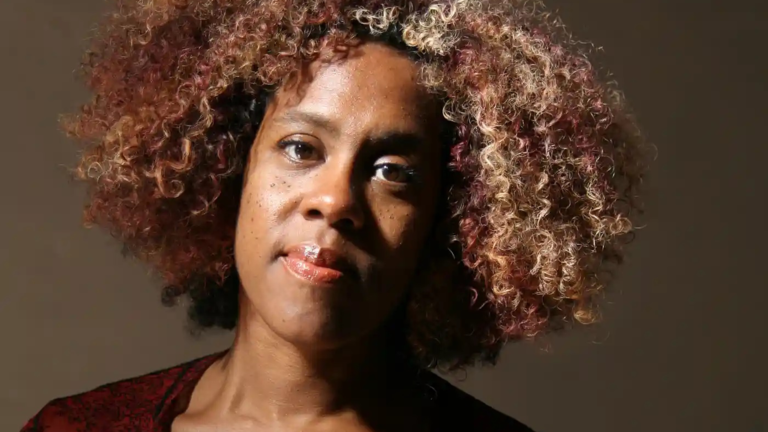
Errollyn Wallen — ‘renaissance woman of contemporary British music’ (The Observer) — is as respected a singer-songwriter of pop influenced songs as she is a composer of contemporary new music. Communication is at the centre of both worlds: engaging the audience, speaking directly to hearts and minds. Born in Belize, Errollyn Wallen gave up her […]
Hervé Sellin was born in 1957 in Paris. He started playing trumpet, then trombone and did classical piano studies at the Conservatoire National Supérieur de Paris with Aldo Ciccolini. He obtained, in 1980, a double prize of piano and chamber music. During the same period his father, great French trumpet player Pierre Sellin, introduced him […]