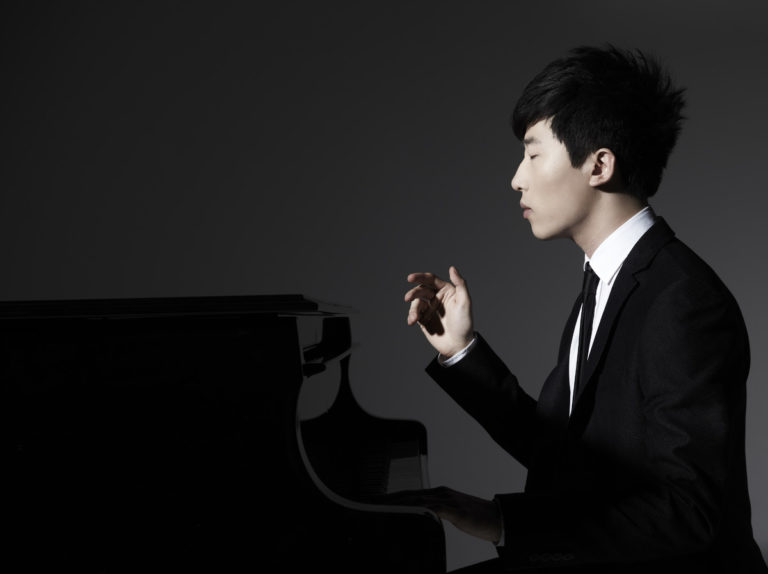
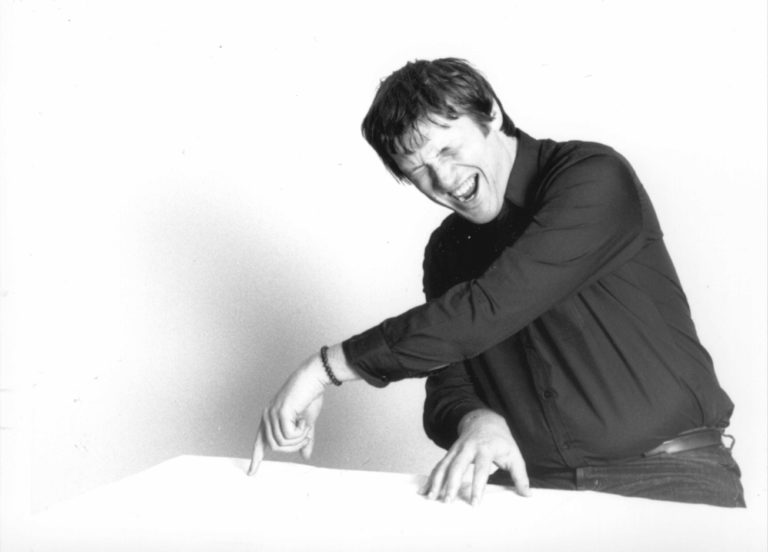
Behzod Abduraimov performs with renowned orchestras worldwide including the Philharmonia Orchestra, the Los Angeles Philharmonic, Deutsches Symphonie-Orchester Berlin, San Francisco Symphony, Cleveland Orchestra, Orchestre de Paris and Concertgebouworkest and with prestigious conductors such as Valery Gergiev, Lorenzo Viotti, James Gaffigan, Jakub Hrůša, Santtu-Matias Rouvali and Gustavo Dudamel.

In recital Behzod has appeared a number of times at Carnegie Hall’s Stern Auditorium, Queen Elizabeth Hall in London and Amsterdam’s Concertgebouw, and has recently been presented by Chicago Symphony, Kölner Philharmonie and Festspielhaus Baden-Baden. Festival appearances include Aspen, Verbier, Rheingau, La Roque Antheron and Lucerne Festivals.

Forthcoming engagements include Chicago Symphony under Lahav Shani, returns to the Concertgebouworkest, St Petersburgh Philharmonic, Seattle and Dallas Symphonies as well as Oslo and Israel Philharmonic Orchestras. Behzod will be returning to the Barbican Hall, 92nd Street Y, Spivey Hall, Vancouver Recital Series as well as The Conrad Center, La Jolla.

2020 saw the release of two recordings: Rachmaninov’s Rhapsody on a Theme of Paganini with Lucerne Symphony Orchestra under James Gaffigan, recorded on Rachmaninov’s own piano from Villa Senar for Sony Classical and Rachmaninov’s Piano Concerto No.3 with Concertgebouworkest under Valery Gergiev, for the RCO live label. Both recordings were nominated for the 2020 Opus Klassik awards in multiple categories. A film of his BBC Proms debut in 2016, with the Münchner Philharmoniker under Valery Gergiev, was released as a DVD in 2018.His 2012 debut CD of Liszt, Saint-Saëns and Prokofiev for Decca won the Choc de Classica and Diapason Découverte and his first concerto disc for the label featured Prokofiev’s Piano Concerto No.3 and Tchaikovsky’s Concerto No.1.

Born in Tashkent, Uzbekistan, in 1990, Behzod began the piano aged five as a pupil of Tamara Popovich at Uspensky State Central Lyceum in Tashkent. In 2009, he won First Prize at the London International Piano Competition with Prokofiev’s Piano Concerto No.3. He studied with Stanislav Ioudenitch at the International Center for Music at Park University, Missouri, where he is Artist-in-Residence.

Joaquin Achúcarro has been described by the Chicago Sun Times as “The Consummate Artist”. His impeccable and modelic artistic career has earned him a reputation of the highest degree both nationally and internationally.

Born in Bilbao, he won in his student days a number of International Prizes in Spain, France, Italy and Switzerland, but it was his victory in England at the 1959 Liverpool International Competition (one year after Zubin Mehta had won it as conductor) and the rave reviews in the London papers after his debut with the London Symphony in the Royal Festival Hall that marked the beginning of his career.

Since then, Achúcarro has been enjoying an uninterrupted international career touring 61 countries performing  in venues such as Avery Fisher Hall, Berlin Philharmonie, Carnegie Hall, Concertgebouw, Kennedy Center, Musikverein, Royal Albert Hall, Salle Gaveau, Salle Pleyel, Teatro alla Scala, Suntory Hall, Sydney Opera House, Teatro Colón and The Barbican both playing recitals and as soloist with over two hundred different orchestras including: Berlin Philharmonic, New York Philharmonic, Chicago Symphony, Los Angeles Philharmonic, La Scala of Milan, London Philharmonic, Sydney Symphony, Sta Cecilia di Roma, RTE Ireland, BBC Symphony, Philharmonia, Royal Scottish, City of Birmingham, Hallé, National de France, Yomiuri, Tokyo Philharmonic, Tokyo Symphony, RIAS Berlin, Tonkunstler Wien, Nacional de Chile, de Mexico, de Colombia, de Venezuela and, of course, every Spanish Orchestra, under more than 350 conductors such as Claudio Abbado, Sir Adrian Boult, Riccardo Chailly, Sir Colin Davis, Zubin Mehta, Sir Yehudi Menuhin, Seiji Ozawa and Sir Simon Rattle.

He was named “Artist for Peace” in 2000 by the UNESCO in Paris in recognition of “his extraordinary artistic achievement”. He is Accademico ad Honorem of the Accademia Chigiana in Siena, Italy, and in his home country, Achúcarro has received the highest honours in the Arts: the Gold Medal of Fine Arts, The National Award for Music and in 2003, King Juan Carlos of Spain bestowed upon him the Great Cross of Civil Merit.

The International Astronomical Union (IAU) named the miniplanet 2131 under Achucarro´s name as  a tribute to his successful international career.

His DVD/BluRay “ACHUCARRO plays BRAHMS”, with Brahms n.2 piano concerto under Sir Colin Davis and London Symphony (Opus Arte), obtained 5 stars all over Europe, being “Editor´s Choice” of CLASSIC FM Magazine and rated “Outstanding” by the INTERNATIONAL RECORD REVIEW (both in London), immediately climbing to the top of the Bestsellers and Hot New Releases charts in amazon.com

A few months later, Euroarts released Achucarro´s new DVD/BluRay ”FALLA and FRIENDS” playing Falla Nights in the Garden of Spain with Berlin Philharmonic and Sir Simon Rattle at the Philarmonie Hall in Berlin, also received with great acclaim.

Last year, Sony has reissued his famous GOYESCAS by Granados and his Falla CD with London Symphony and conductor Eduardo Mata.

Achúcarro rewrote and recorded also for SONY his own revision of Joaquin Rodrigo’s Piano Concerto. He has prize-winning recordings of de Falla, Granados, Ravel and Brahms with BMG-RCA, Claves and Ensayo. Other recordings include music by Schumann, Schubert, Chopin, Beethoven, Debussy, Bartok, Rachmaninoff, Scriabin, Turina and Hermann.

Since August 1989 he holds the Tate Chair at Southern Methodist University in Dallas adjusting his teaching periods to his busy concert schedule.

In 2008, the “Joaquin Achucarro Foundation” was created by a group of individuals and institutions from the Dallas community “to perpetuate his artistic and teaching legacy” and to help young pianists at the outset of their careers.

Born on 23 July 1944 in Lisbon, Maria João Pires gave her first public performance at the age of 4 and began her studies of music and piano with Campos Coelho and Francine Benoît, continuing later in Germany, with Rosl Schmid and Karl Engel. In addition to her concerts, she has made recordings for Erato for fifteen years and Deutsche Grammophon for twenty years.

Since the 1970s, she has devoted herself to reflecting the influence of art in life, community and education, trying to discover new ways of establishing this way of thinking in society. She has searched for new ways which, respecting the development of individuals and cultures, encourage the sharing of ideas.

In 1999, she created the Centre for the Belgais Centre for the Study of the Arts in Portugal. Maria João Pires regularly offers interdisciplinary workshops for professional musicians and music lovers. In the Belgais concert hall concerts and recordings regularly take place. In future these will be shared with the international digital community (pay and non-pay).

In 2012, in Belgium, she initiated two complementary projects; the Partitura Choirs, a project which creates and develops choirs for children from disadvantaged backgrounds as in Belgium the „Hesperos Choir, and the Partitura Workshops. All of the Partitura projects have the aim to create an altruistic dynamic between artists of different generations by proposing an alternative in a world too often focused on competitiveness. This philosophy is being spread worldwide at Partitura projects and workshops.

Pianist Isata Kanneh-Mason is in great demand internationally as a soloist and chamber musician. She offers eclectic and interesting repertoire, with her recital programmes encompassing music from Haydn and Mozart, via Fanny Mendelssohn and Clara Schumann, Chopin and Brahms, to Gershwin and beyond. In concerto, she is equally at home in Felix Mendelssohn and Clara Schumann, whose piano concerto featured on Isata’s chart-topping debut recording, as in Prokofiev and Dohnányi.

In 2022/23 Isata steps into her role as Artist in Residence with the Royal Philharmonic Orchestra, performing three concerti across the season at London’s Cadogan Hall. She returns to Dortmund’s Konzerthaus as one of their Junge Wilde artists and makes multiple visits to both the BBC Scottish Symphony Orchestra and the Royal Liverpool Philharmonic. Other highlights of the season include recital performances at the Barbican, Queen Elizabeth, and Wigmore halls in London, the Philharmonie Berlin, National Concert Hall Dublin, Perth Concert Hall, Prinzregententheater Munich, and the Sala São Paulo. As concerto soloist, Isata appears with the Orchestra of Opera North, New World Symphony Miami, City of Birmingham Symphony, Duisburg Philharmonic, Barcelona Symphony, Geneva Chamber Orchestra, Detroit Symphony, and Orchestra of Norwegian Opera. She returns to the Baltimore Symphony and recently made her long-awaited debut with the LA Philharmonic at the Hollywood Bowl.

Isata is a Decca Classics recording artist. Her 2019 album, “Romance – the Piano Music of Clara Schumann”, entered the UK classical charts at No. 1, Gramophone magazine extolling the recording as “one of the most charming and engaging debuts”. This was followed in 2021 by “Summertime”, an album of 20th-century American repertoire featuring Samuel Barber’s Piano Sonata and a world premiere recording of Samuel Coleridge-Taylor’s Impromptu in B minor.  In November 2021, along with her cellist brother, Sheku Kanneh-Mason, Isata released her first duo album entitled “Muse”, beautifully demonstrating the siblings’ musicality and refined skill borne from years of playing and performing together.

She was an ECHO Rising Star in 21/22, performing in many of Europe’s finest halls and is also the recipient of the coveted Leonard Bernstein Award and an Opus Klassik award for best young artist.

Born in St Petersburg, Olga Peretyatko began her career in the children’s choir of the Mariinsky Theatre, before studies in Berlin and training with the Opera Studio at the Staatsoper Hamburg. Her victory in the Operalia competition propelled her to the forefront of the stage, a position she has held ever since. The soprano is now one of the most fervent representatives of bel canto in the world, but also a personality with unerring adaptability and intense acting, making the most eminent opera programmes a delight. A Franco Abbiati Prize, notable roles in Le Nozze di Figaro, Die Zauberflöte and Anna Bolena, as well as an enlightened interpretation of the Four Women (Les Contes d’Hoffmann) have confirmed her international reputation in recent years.

With his extraordinary pianistic talents, Fazil Say has been touching audiences and critics alike for more than twenty-five years, in a way that has become rare in the increasingly materialistic and elaborately organised classical music world. Concerts with this artist are something different. They are more direct, more open, more exciting; in short, they go straight to the heart. Which is exactly what the composer Aribert Reimann thought in 1986 when, during a visit to Ankara, he had the opportunity, more or less by chance, to appreciate the playing of the sixteen-year-old pianist. He immediately asked the American pianist David Levine, who was accompanying him on the trip, to come to the city’s conservatory, using the now much-quoted words: ‘You absolutely must hear him, this boy plays like a devil.’

Fazıl Say had his first piano lessons from Mithat Fenmen, who had himself studied with Alfred Cortot in Paris. Perhaps sensing just how talented his pupil was, Fenmen asked the boy to improvise every day on themes to do with his daily life before going on to complete his essential piano exercises and studies. This contact with free creative processes and forms are seen as the source of the immense improvisatory talent and the aesthetic outlook that make Fazıl Say the pianist and composer he is today. He has been commissioned to write music for, among others, the Salzburger Festspiele, the WDR and the Schleswig-Holstein Musik Festival, the Festspiele Mecklenburg- Vorpommern, the Konzerthaus Wien, the Dresdner Philharmonie, the Louis Vuitton Foundation, the Orpheus Chamber Orchestra and the BBC. His oeuvre includes four symphonies, two oratorios, various solo concertos and numerous works for piano and chamber music.

From 1987 onwards, Fazıl Say fine-tuned his skills as a classical pianist with David Levine, first at the Musikhochschule “Robert Schumann” in Düsseldorf and later in Berlin. In addition, he regularly attended master classes with Menahem Pressler. His outstanding technique very quickly enabled him to master the so-called warhorses of the repertoire with masterful ease. It is precisely this blend of refinement (in Bach, Haydn and Mozart) and virtuoso brilliance in the works of Liszt, Mussorgsky and Beethoven that gained him victory at the Young Concert Artists international competition in New York in 1994. Since then he has played with all of the renowned American and European orchestras and numerous leading conductors, building up a multifaceted repertoire ranging from Bach, through the Viennese Classics (Haydn, Mozart and Beethoven) and the Romantics, right up to contemporary music, including his own piano compositions.

Guest appearances have taken Fazıl Say to countless countries on all five continents; the French newspaper “Le Figaro” called him ‘a genius’. He also performs chamber music regularly: for many years he was part of a fantastic duo with the violinist Patricia Kopatchinskaja. Other notable collaborators include Maxim Vengerov, the Minetti Quartet, Nicolas Altstaedt and Marianne Crebassa.

From 2005 to 2010, he was artist in residence at the Konzerthaus Dortmund; during the 2010/11 season he held the same position at the Konzerthaus Berlin. Fazıl Say was also a focal point of the programme of the Schleswig- Holstein Musik Festival in the summer of 2011. There have been further residencies and Fazıl Say festivals in Paris, Tokyo, Meran, Hamburg, and Istanbul. During the 2012/13 season Fazıl Say was the artist in residence at the hr- Sinfonieorchester Frankfurt and at the Rheingau Musik Festival 2013, where he was honoured with the Rheingau Musik Preis. In April 2015 Fazıl Say gave a successful concert with the Orpheus Chamber Orchestra at Carnegie Hall, New York, followed by a tour with concerts throughout Europe. In 2014 he was artist in residence at the Bodenseefestival, where he played 14 concerts. During their 2015/2016 season the Alte Oper Frankfurt and the Zürcher Kammerorchester invited him to be their Artist in Residence, he spent three seasons as Artist in Residence at the Festival der Nationen in Bad Wörishofen and was Composer in Residence at the Dresdner Philharmonie in 2018/19.

In December 2016, Fazıl Say was awarded the International Beethoven Prize for Human Rights, Peace, Freedom, Poverty Reduction and Inclusion, in Bonn. In the autumn of 2017, he was awarded the Music Prize of the city of Duisburg.

His recordings of works by Bach, Mozart, Beethoven, Gershwin and Stravinsky with Teldec Classics as well as Mussorgsky, Beethoven and his own works with the label naïve have been highly praised by critics and won several prizes, including three ECHO Klassik Awards. In 2014, his recording of Beethoven’s piano concerto No. 3 (with hr- Sinfonieorchester Frankfurt / Gianandrea Noseda) and Beethoven’s sonatas op. 111 and op. 27/2 Moonlight was released, as well as the CD ‘Say plays Say’, featuring his compositions for piano. Since 2016 Fazıl Say is an exclusive Warner Classics artist. In the autumn of 2016, his recording of all of Mozart sonatas was released on that label, for which, in 2017, Fazıl Say received his fourth ECHO Klassik award. Together with Nicolas Altstaedt, he recorded the album “4 Cities” (2017). In autumn 2017 Warner Classics released the Nocturnes Frédéric Chopins and the album “Secrets” with French songs, which he recorded together with Marianne Crebassa and which won the Gramophone Classical Music Award in 2018. His 2018 album is dedicated to Debussy and Satie, whilst with his most recent recording “Troy Sonata – Fazıl Say Plays Say” he presents only his own works.

The Observer called him “the definition of virtuosity”: Japan’s Nobuyuki Tsujii, who has been blind since birth, has won admiration wherever he goes since winning the Gold Medal at the Van Cliburn International Piano Competition in 2009. He has performed with the Mariinsky Theatre Orchestra, the Philharmonia Orchestra, the Filarmonica della Scala and the Sinfonieorchester Basel. His recitals regularly take him to the Théâtre des Champs-Élysées, the Wigmore and Royal Albert Halls, the Berlin Philharmonic and the Musikverein. His brilliant debuts in recent seasons augur well for future collaborations, such as the one with the Oslo Philharmonic Orchestra, which will tour under the direction of Klaus Mäkelä in spring 2021.

Ekaterina Semenchuk is one of the most sought-after mezzo-sopranos, known for her exceptional range and unparalleled technique. Born in Minsk, she made her stage debut at the Mariinsky Theatre while still studying at the Rimsky-Korsakov Conservatory in St Petersburg, and her career has since seen her perform at all the major houses across the world.
Recognised as one of the world’s most pre-eminent Verdi mezzos, Ekaterina’s signature operatic roles include Azucena Il Trovatore, Eboli Don Carlo, Amneris Aida, and Lady Macbeth Macbeth. Beyond Verdi, she is known for her portrayals of Princess de Bouillon Adriana Lecouvreur, Didon Les Troyens, Santuzza Cavalleria Rusticana, Marina Boris Godunov, Laura La Gioconda, Lyubov Mazeppa, Marfa Khovanshchina, Dalila Samson et Dalila, Giovanna Seymour Anna Bolena, Preziosilla La forza del destino, and the title role in Carmen.
Recent seasons have seen Ekaterina perform at The Metropolitan Opera, Opéra de Paris, Teatro Real Madrid, Bolshoi Theatre, Royal Opera House Covent Garden, Salzburg Festival, New National Theatre Tokyo, San Francisco Opera, Staatsoper Unter den Linden, Teatro di San Carlo di Napoli, Bayerische Staatsoper, Arena di Verona, Baden-Baden Festival, Berliner Philharmonie, and Teatro alla Scala Madrid, among others. In addition to her international career, she retains a strong relationship with the Mariinsky Theatre and Maestro Gergiev.
This season, Ekaterina returns to the Wiener Staatsoper for Anna Bolena, to La Scala for Macbeth, Dresden Semperoper for Carmen, and to the Bayerische Staatsoper in Macbeth and Les Troyens. In recital with pianist Semion Skigin, Ekaterina debuts at Salle Gaveau, Paris, and returns to La Scala, Bozar, and Boulez Saal. Ekaterina makes her long-awaited return to the Wigmore Hall in December 2021.

Winner of the First Prize in the 2010 Queen Elisabeth Competition in Brussels at the ge of 23, Denis Kozhukhin has established himself as one of the greatest pianists of his generation.

Kozhukhin’s performances have been praised by critics as “spellbinding”, “imperious” and “mesmerizing”. Technically flawless, Kozhukhin combines wisely the brilliance and power of his playing with a masterful sense of form, maturity, and a very unique approach.

Kozhukhin frequently appears with many of the leading international orchestras, such as Royal Concertgebouw Orchestra, London Symphony, Staatskapelle Berlin, Israel Philharmonic, Chicago Symphony, Philadelphia Orchestra, San Francisco Symphony, Rotterdam Philharmonic, London Philharmonic, Philharmonia Orchestra, NDR Radiophilharmonie, Vienna Symphony, St. Petersburg Philharmonic, Royal Stockholm Philharmonic and Oslo Philharmonic Orchestra, among others. In 2018 he debuted at the BBC Proms, performing Shostakovich Piano Concerto No.2 with the Aurora Orchestra.

The 20/21 brings debuts with Los Angeles Philharmonic, Malmo Symphony, Antwerp Symphony, ADDA Orchestra, Bilbao Symphony, Szcezcin Philharmonic, returns to the Philharmonia Orchestra, London Philharmonic, BBC Scottish Symphony, Belgium National Symphony, Moscow State Symphony Orchestra, St. Petersburg Philharmonic, Iceland Symphony, Gavle Symphony, Colorado Symphony and NCPA Orchestra. Denis will tour in Europe and USA with Janine Jansen and appear in recital at the Boulez Saal, Elbphilharmonie, Wiener Konzerthaus, Casa da Musica, Harpa, and will be guest artist at the Prague Spring Festival, Malta International Festival, Klavier Ruhr Festival, Armenia Festival and Jerusalem Chamber Music Festival.

His most recent recording featuring C. Franck’s Symphonic Variations with the Luxembourg Philharmonic under Gustavo Gimeno was released by Pentatone in June 2020, obtaining rave reviews. His last solo album, including Mendelssohn’s Songs without words and Grieg’s Lyric Pieces, was picked by Gramophone as “album of the month” as well as nominated to the 2020 Opus Klassik Awards in the categories of Solo recording and Instrumentalist of the year.

An avid chamber musician, Kozhukhin is frequently invited to the most renowned festivals and collaborates with such artists as Janine Jansen, Jörg Widmann, Julian Rachlin, Vadim Repin, Leonidas Kavakos, Michael Barenboim, Vilde Frang, Renaud and Gautier Capuçon, the Jerusalem Quartet, the Pavel Haas Quartet, Elena Bashkirova, Radovan Vlatkovic, Emmanuel Pahud, Alisa Weilerstein, Nicolas Alstaedt, Julian Steckel, and Pablo Ferrández, among others.

Born in Nizhni Novgorod, Russia, in 1986 into a family of musicians, Denis Kozhukhin began his piano studies at the age of five with his mother. As a boy, he attended the Balakirev School of Music where he studied under Natalia Fish. From 2000 to 2007, Kozhukhin studied at the Reina Sofía School of Music in Madrid with Dimitri Bashkirov and Claudio Martinez-Mehner. Kozhukhin completed his studies at the Piano Academy at Lake Como where he received advice from Fou Ts’ong, Stanislav Yudenitch, Peter Frankl, Boris Berman, Charles Rosen and Andreas Staier, and with Kirill Gerstein in Stuttgart. In recent years he has been mentored by maestro Daniel Barenboim.

Ambrogio Maestri was born in Pavia where he studied singing and piano.

His sensational debut in 2001 coincided with the most important musical event of the Verdi Centennial, Falstaff, conducted by Riccardo Muti and directed by Giorgio Strehler, which saw him in the leading role at the Teatro alla Scala in Milan and the historic Teatro Verdi in Bussetto.

This interpretation earned him enthusiastic reviews from the international press and opened the doors of the most important opera houses in the world.The collaboration with Riccardo Muti lead him over the next three years to debut at the Teatro alla Scala in some of the most emblematic Verdi roles such as Iago in Otello, Renato in Un Ballo in maschera, Don Carlo di Vargas in La forza del destino and Giorgio Germont in Traviata, thereby strengthening the foundations of a constantly ascending career.

Guest of the most prestigious opera companies world-wide (Metropolitan Opera, Opera de Paris, Covent Garden, Staatsoper di Vienna, Deutsche Oper di Berlino, Maestri continues his Verdian journey performing as the Conte di Luna in Trovatore, Amonasro in Aida, Rolando in La battaglia di Legnano, and in the leading roles of Simon Boccanegra, Rigoletto and Nabucco.

Loved by the public and critics who continue to support him with the same enthusiasm as at the beginning of his career, Maestri is confirmed as one of the most acclaimed baritones on the international scene.In a rewarding career with an abundance of roles Maestri has obviously continued to bring Falstaff to the most important stages, with Sir John becoming his true alter ego through in depth research and interpretative recitation. In fact each new production represents a challenge that enables Maestri to study and experiment unedited actors’ and voice nuances. The continuing analysis and refining of the character, also carried out by confrontation with the greatest directors and conductors , brings a wealth of new results.

The ten-year collaboration with the Arena di Verona led him during the 2012 season to celebrate his one hundredth performance of another beloved opera: Aida. A significant milestone that results in a mature and complex interpretation of the character of Amonasro.

In these years of intense activity Maestri has been directed by the best conductors of the international scene including Zubin Mehta, Daniele Gatti, Daniel Oren, Fabio Luisi, Antonio Pappano, Jeffrey Tate, Nello Santi, Marcello Viotti, Marco Armiliato, Gianandrea Noseda, Renato Palumbo, Daniel Harding…and by directors such as Franco Zeffirelli, Robert Carsen, Graham Vick, Peter Stein, Bob Wilson, Larent Pelly, Mario Martone, Hugo De Ana, Bartlett Sher…

In 2006 Maestri encountered for the first time the character of Dulcamara. The Opera de Paris, planning a new production of Elisir d’amore, wished to assign, as in the past, the role of the congenial charlatan to a baritone. The success of the performance rewarded this decision recognizing in Maestri a vocal flexibility that permits him to range from serious to buffo repertoires.In the last four years Maestri has confronted Puccini and Verismo. He debuted in Tosca at Torre del Lago, Cavalleria rusticana at the Metropolitan in New York and Pagliacci at La Scala in Milan. The choice of playing such strong and passionate characters came, not surprisingly, after a decade of experience. This stage experience in fact allows him to enhance the vehemence of his own vocal weight without losing the la linea del canto.

In 2012 the director Ferzan Ozpetek, who had directed Ambrogio in Aida at the Maggio Musicale Fiorentino, offered him a role in his film Magnifica presenza. Playing the part of an opera singer in the forties, Ambrogio Maestri had a cinematographic experience alongside an exceptional cast, made up of some of today’s greatest Italian actors.

Verdi’s bicentennial in 2013 represents the consecration of Maestri as a reference Falstaff. He was Sir John at La Scala, at the Opèra National de Paris, at Zurich’s Opernhaus, at Salzburg’s Festival, in Munich, in Tokyo, and at the Met in New York where he celebrated his 200th performance of the role. In 2013 he also interpreted Nabucco at the Arena di Verona; Amonasro in Aida at La Scala, at the Arena di Verona, and in Tokyo; and Simon Boccanegra at Turin’s Teatro Regio.

In 2014 Ambrogio will be working on several productions such as Pagliacci in Vienna, Tosca in Barcelona, Nabucco in Munich, Othello at Turin’s Teatro Regio, Aida at Rome’s Opera. We will see his Falstaff in Amsterdam with the Royal Concertgebouw Orchestra, in San Paolo in Brazil, and in Buenos Aires at the Teatro Colon.
He will also make his debut as Gerard in Andrea Chenièr at the Peralada Festival.