Giuseppe Verdi did not simply compose the greatest operas of the nineteenth century: he became, almost in spite of himself, a companion to the birth of modern Italy. His name turned into a rallying cry for patriots: “Viva Verdi!”, chanted in the streets, concealed a coded message — Long Live Vittorio Emanuele, King of Italy.
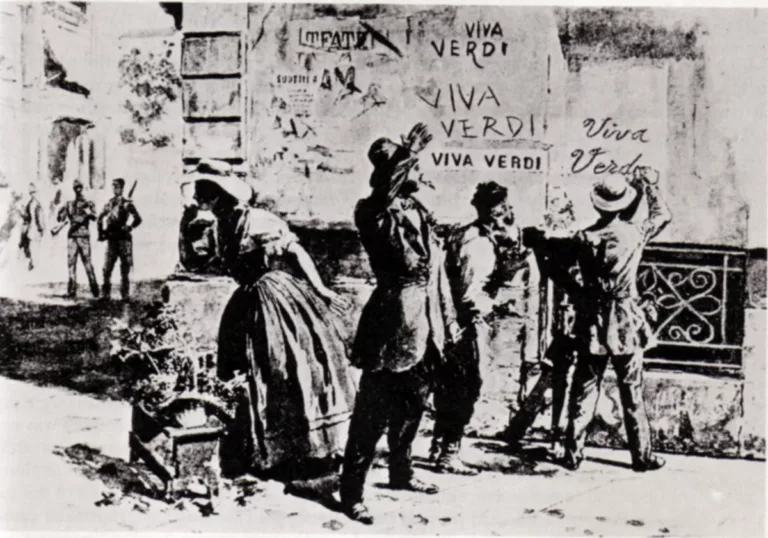
Drawing from 1859, “Viva Verdi!” © The Bettman Archive
As early as 1842, his opera Nabucco and its famous Chorus of the Hebrew Slaves established him as a figure of the Italian independence movement. But it was in the early 1850s, with three operas premiered in quick succession, Rigoletto, Il trovatore and La Traviata, that Verdi won a fame reaching far beyond the peninsula’s borders.
Inspired by Alexandre Dumas fils’s La Dame aux camélias, La Traviata premiered at La Fenice in Venice on 6 March 1853. Foreshadowing Puccini’s verismo operas, it struck audiences accustomed to heroic drama with its intimate character: it would take some time for them to grow used to seeing opera invite itself… into their own homes!
One of the greatest fiascos in the history of opera
The work’s early days were extremely chaotic. In what would prove to be one of the great fiascos, Verdi ran head-on into the intransigence of his patrons.
First there was the matter of the leading character, Violetta, a consumptive courtesan living out her final hours, a role in which the new prima donna imposed by La Fenice’s management, Fanny Salvini-Donatelli, failed for a single instant to convince. Verdi had nonetheless been perfectly clear, calling for his tragic heroine to be “una donna di prima forza”, “an elegant, youthful personality, capable of singing with passion”.
Then there was the matter of the setting, which the composer had clearly placed in his own era, the Paris of 1850, and which the theatre, fearing Austrian imperial censorship, saw fit to shift back a century and a half, shattering the sense of proximity, of intimate communion with the characters, that Verdi and his librettist Francesco Maria Piave had sought. To this was added a Germont père (the baritone Felice Varesi) left sulking by how slight his role was compared with what Verdi had given him in Macbeth and Rigoletto. The fiasco became inevitable.
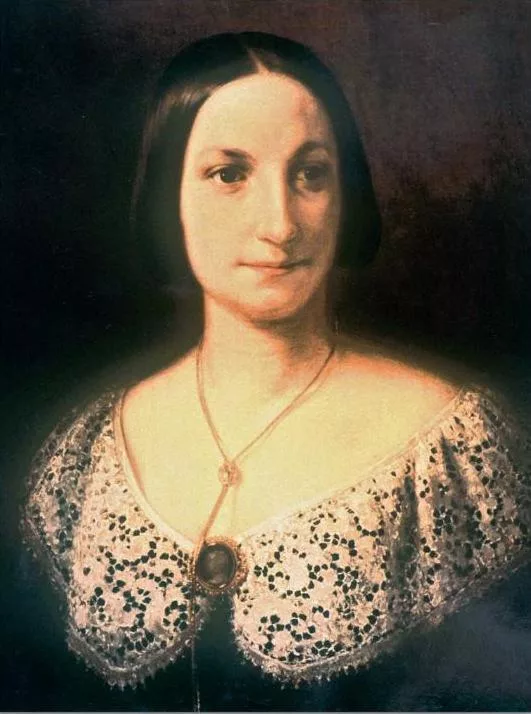
Fanny Salvini-Donatelli at La Fenice (1853)
What shocked audiences then changed opera forever
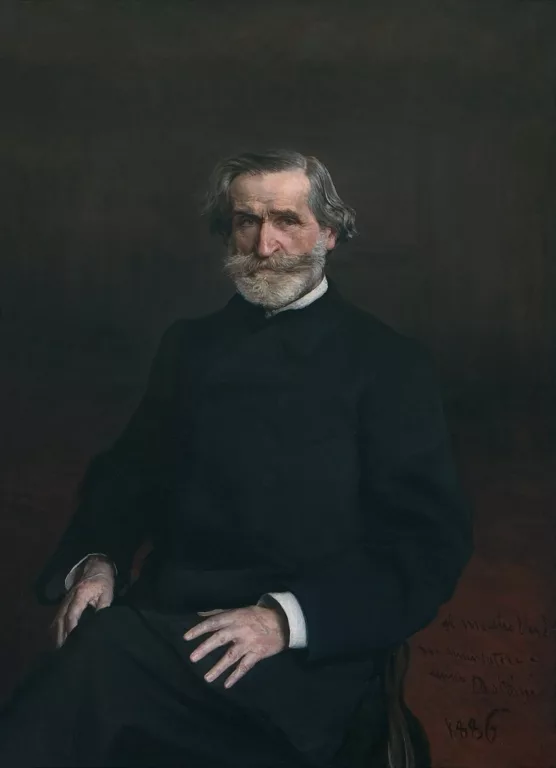
Verdi by Boldini (1886)
With hindsight, this initial failure looks above all like a misunderstanding between a work ahead of its time and an audience not yet ready to receive it. Verdi had already gauged this risk a year earlier in Paris, where Dumas’s La Dame aux camélias had provoked stormy reactions at the Théâtre du Vaudeville. He chose, nonetheless, to press ahead with his project.
And this audacity broke new ground. For beyond the shock caused by this thoroughly revolutionary embrace of lyric drama, the stage and its theatre suddenly drew closer to the beating heart of the spectator, sharpening the power of emotion through this very closeness. The field of possibility was thus significantly widened for composers to come; Puccini and his Parisian Bohème spring first to mind.
Deadly bourgeois conventions
What is it about? A tragic love story set in the Paris of the early years of the Second Empire. Alfredo Germont, a young man from a respectable Provençal family, falls for a well-known courtesan, Violetta Valéry, who, struck by love at first sight, decides to change her life.
But bourgeois society does not forgive such a departure from convention. Alfredo’s father persuades the former “fallen woman” (a literal translation of “traviata”) to leave him, without explaining her real reason for doing so. Devastated by what he first takes for a waning passion, Alfredo realises too late that his beloved was forced into it and was condemned by tuberculosis. The drama of “real” life, simple and brutal.
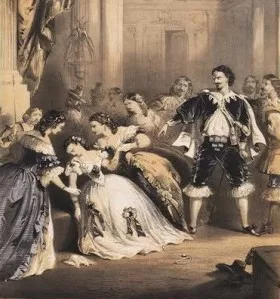
Alfredo, furious, publicly insults Violetta.
Dream finale on 2 August, under the baton of James Gaffigan
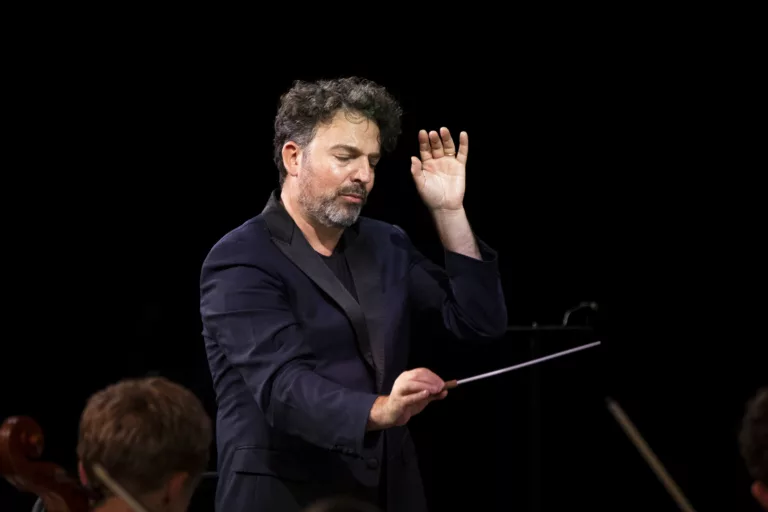
James Gaffigan © Nicolas Brodard
As will be clear by now, this Traviata calls for exceptional singers who are also true actors. The role of Violetta alone is a genuine Everest: it demands a coloratura soprano voice in the first act, a lyric voice in the second, before shifting into a dramatic register in the third. The talented singers of the Academy’s Atelier Lyrique are, without doubt, cut from that cloth, with the young Georgian soprano Ana Oniani (Violetta), Michael McDermott (Alfredo) and David Roy (Germont). A regal finale awaits on 2 August, under the no less virtuosic baton of James Gaffigan, who has been working wonders at the helm of the Verbier Festival Junior Orchestra since 2021.

 Sunday, August 2, 2026, 2:00 PM to 4:30 PM
 Salle Des Combins