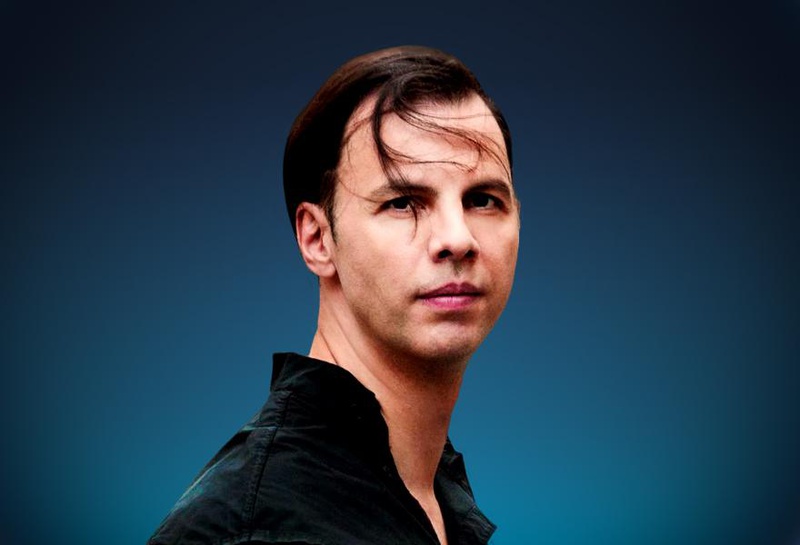
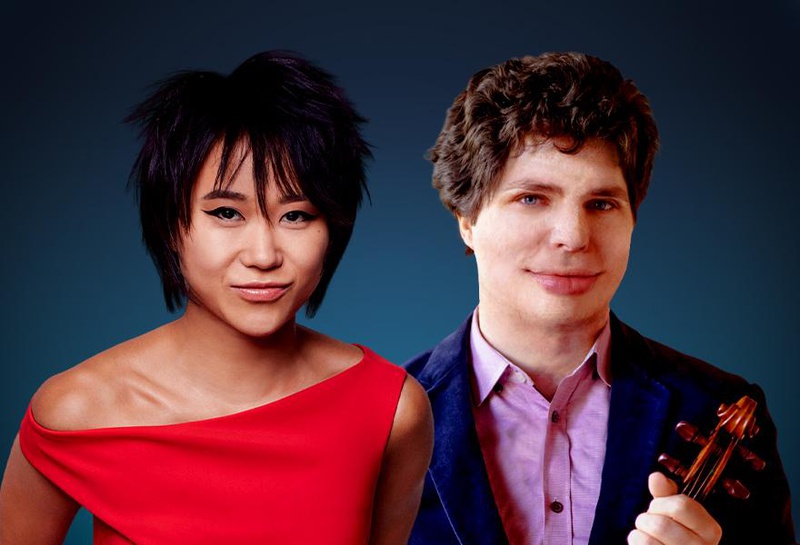
TEODOR CURRENTZIS / YUJA WANG

A dazzling concert! Virtuosity, jazz and driving rhythms are the watchwords of a concert conceived as an apotheosis of the dance. At the helm, pianist Yuja Wang and conductor Teodor Currentzis combine volcanic temperament with pinpoint precision. Fasten your seatbelts!
Programme
DMITRI SHOSTAKOVICH (1906-1975)
Piano Concerto No. 2 in F major Op. 102
ALEXANDER TSFASMAN (1906-1971)
Jazz Suite for Piano and Orchestra
Interval
LUDWIG VAN BEETHOVEN (1770-1827)
Symphony No. 7 in A major Op. 92
Artist(s)
- Verbier Festival Chamber Orchestra
- Teodor Currentzis conductor
- Yuja Wang piano
Yuja Wang plays Rachmaninoff: Vocalise, Op. 34 No. 14 (Arr. Kocsis for Piano) at Verbier Festival
Find out more
Written in 1957 at the height of the Khrushchev Thaw, Shostakovich’s Piano Concerto No. 2 was intended for his son Maxim’s 19th birthday. Admittedly, this new opus is less turbulent than its predecessor, the wild and sardonic Concerto No. 1, but the work reveals (because of the era and its dedicatee?) a gentler atmosphere and a less ironic light. The astonishing slow movement returns to a heightened romanticism rather unusual in Shostakovich. After Mikhaïl Pletnev in 2013, Yuja Wang (whose absolute mastery of the most daring scores is well known) revives the extraordinary figure of Alexander Tsfasman. This pianist and composer (not to be confused with the Franco-Polish composer Alexandre Tansman) was the first to perform Gershwin’s Rhapsody in Blue in Moscow and, above all, the author of remarkable jazz-inspired pieces. His irresistible Jazz Suite thus blends the Russian post-Romantic writing of a Prokofiev with the syncopated rhythms of Duke Ellington, in the heart of the Soviet Union. To conclude this exhilarating programme, Teodor Currentzis conducts the most jubilant of Beethoven’s symphonies. First performed in 1813, the Symphony No. 7 is indeed the German composer’s most joyful and Dionysian music, raising rhythmic intoxication to unequalled heights. With the exception of one (famous) slow movement of overwhelming depth, all is joy and frenzy in the closing Presto and Allegro con brio, so much so that Richard Wagner described the work in a phrase that has remained famous: ‘the apotheosis of the dance’.