QUATUOR ÉBÈNE
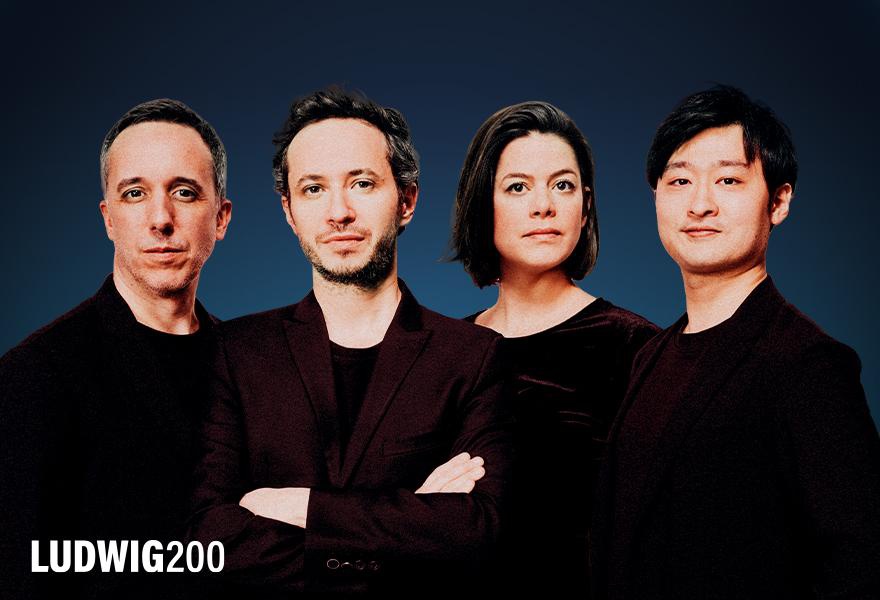
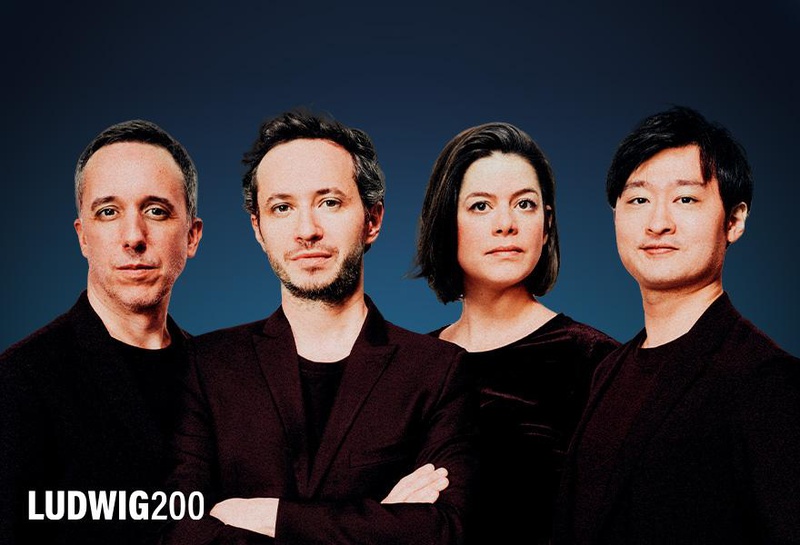
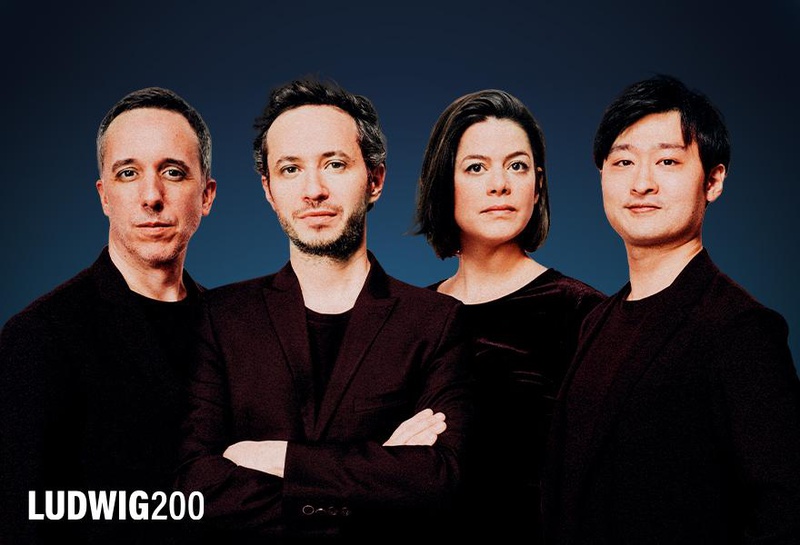
Hearing the complete Beethoven quartets is the experience of a lifetime for musicians and listeners alike. Having completed a first full cycle in 2020, the Quatuor Ébène returns to the task in its new line-up (Pierre Colombet, Gabriel Le Magadure, Marie Chilemme and Yuya Okamoto) for a series of seven exceptional concerts, marking the bicentenary of the German composer’s death.
Programme
LUDWIG VAN BEETHOVEN (1770-1827)
String Quartet No. 3 in D major Op. 18 No. 3
String Quartet No. 11 in F minor Op. 95 “Quartetto Serioso”
Interval
LUDWIG VAN BEETHOVEN (1770-1827)
String Quartet No. 8 in E minor Op. 59 No. 2 “Razumovsky”
Evgeny Kissin and Quatuor Ebene play: Shostakovich: Piano Quintet in G Minor, Op. 57: III. Scherzo
Find out more
Paradoxical passions take centre stage for this third encounter. The Quartet No. 3 is in fact the very first that Beethoven wrote. In the 1790s, the composer was still a young pianist eager to make his name in Viennese high society. His first quartet is thus one of the most serene pieces he ever wrote. By 1810, his deafness had progressed considerably: the Quartet No. 11 earned the name ‘Quartetto Serioso’ (a nickname given by Beethoven himself) because of its violence and drama. Depicting a wide range of emotions with extreme concision, it is also the shortest quartet in the corpus (20 minutes). The second of the three ‘Razumovsky’ quartets, No. 8 also has great intensity. Like its predecessor, it was utterly misunderstood by its contemporaries. Magnanimous, Beethoven is said to have replied to a recalcitrant violinist: ‘It is not for you, it is for a later age’. Once again, it is the slow movement that makes the deepest impression: this Molto Adagio unfolds all the German composer’s spirituality like a ‘meditation beneath the starry sky’. This page, essential to understanding Beethoven’s path, concludes a programme of fine inwardness.