QUATUOR ÉBÈNE
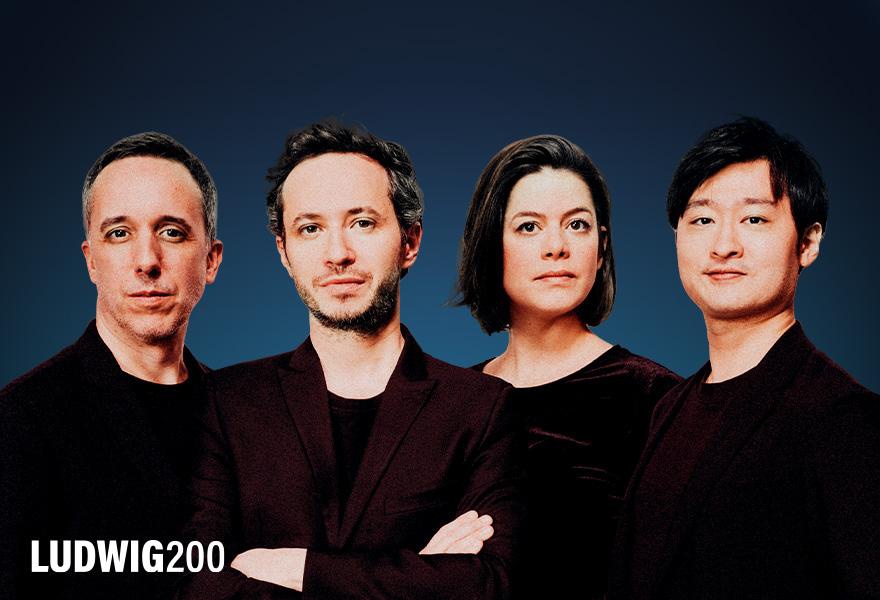
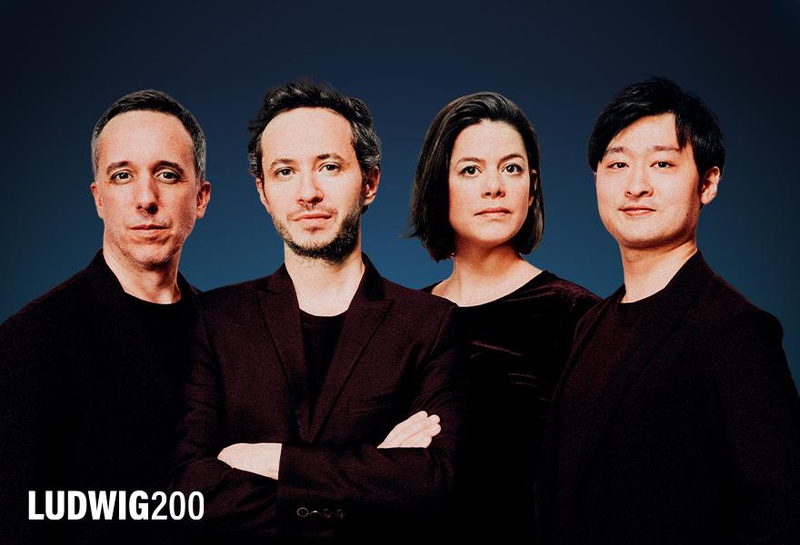
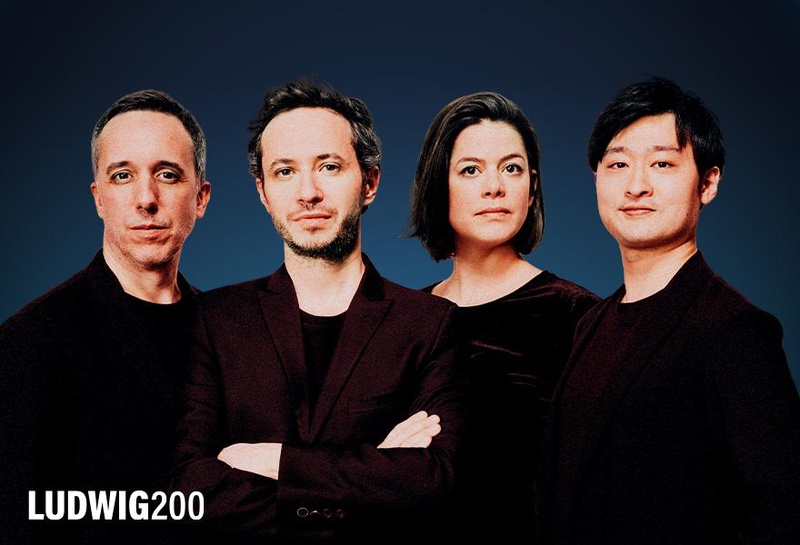
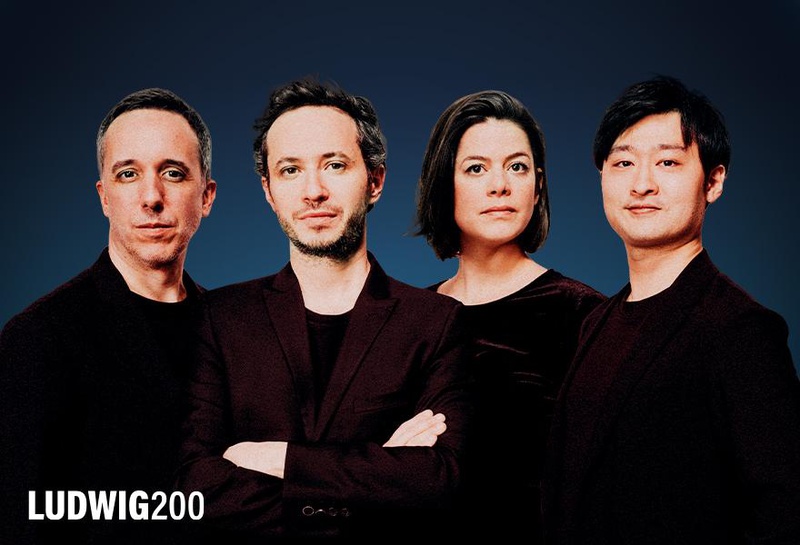
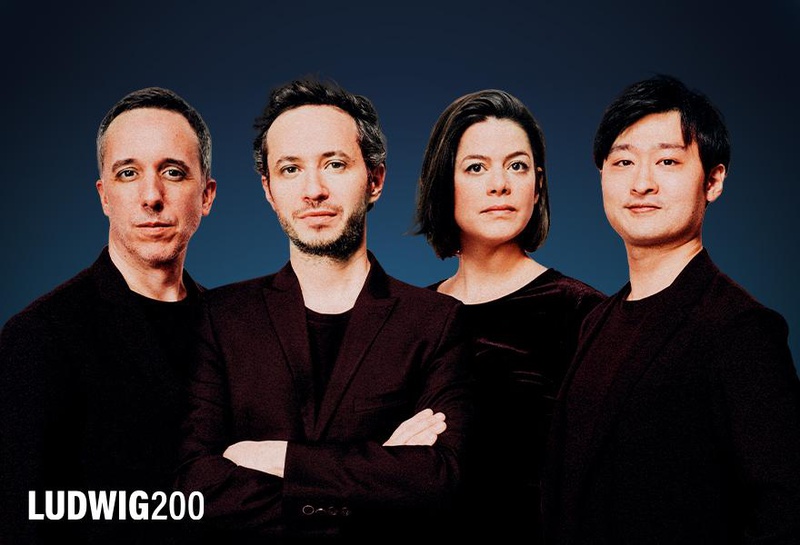
Hearing the complete Beethoven quartets is the experience of a lifetime for musicians and listeners alike. Having completed a first full cycle in 2020, the Quatuor Ébène returns to the task in its new line-up (Pierre Colombet, Gabriel Le Magadure, Marie Chilemme and Yuya Okamoto) for a series of seven exceptional concerts, marking the bicentenary of the German composer’s death.
Programme
LUDWIG VAN BEETHOVEN (1770-1827)
String Quartet No. 4 in C minor Op. 18 No. 4
Interval
LUDWIG VAN BEETHOVEN (1770-1827)
String Quartet No. 7 in F major Op. 59 No. 1 “Razumovsky”
Evgeny Kissin and Quatuor Ebene play: Shostakovich: Piano Quintet in G Minor, Op. 57: III. Scherzo
Find out more
How does one begin a Beethoven cycle? The Ébène (trained, it is worth recalling, at the Verbier Festival Academy) have chosen the Quartet No. 4, which belongs to the German composer’s early period, and the first summit of the corpus, No. 7 ‘Razumovsky’. As a young man, Beethoven was influenced by Mozart and Haydn, as No. 4 eloquently shows. Since the manuscript contains no preliminary sketches, some commentators claim that the composer drew on works from his youth, from the time he lived in Bonn. The result charms with its vigorous momentum and dynamic freshness. Seven years later, Beethoven embarked on a new cycle of three quartets (Nos. 7, 8, 9) dedicated to his patron, the Russian ambassador Razumovsky. Faced with the musicians’ incomprehension, the composer is said to have retorted: ‘What do I care about your wretched fiddles when the spirit speaks to me?’. Indeed, the work profoundly alters the usual balance between the instruments, the cello gradually emancipating itself from the first violin, the movements taking on extraordinary breadth, like the contemporaneous ‘Eroica’ Symphony, while Beethoven pursues an almost symphonic mode of expression, far from the galant tone then associated with the quartet. The summit of No. 7, the Adagio molto e mesto has a devastating expressive intensity. The Beethovenian revolution is under way…