QUATUOR ÉBÈNE
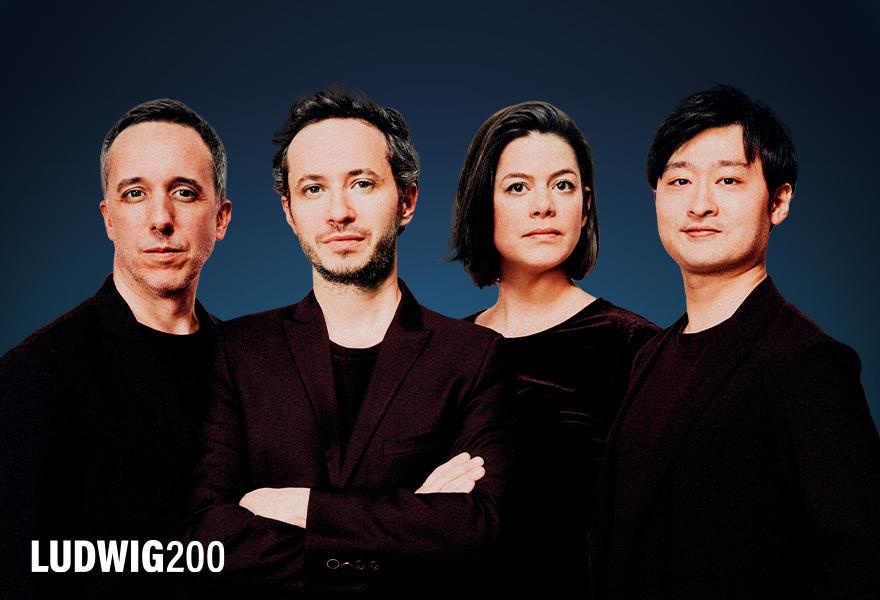
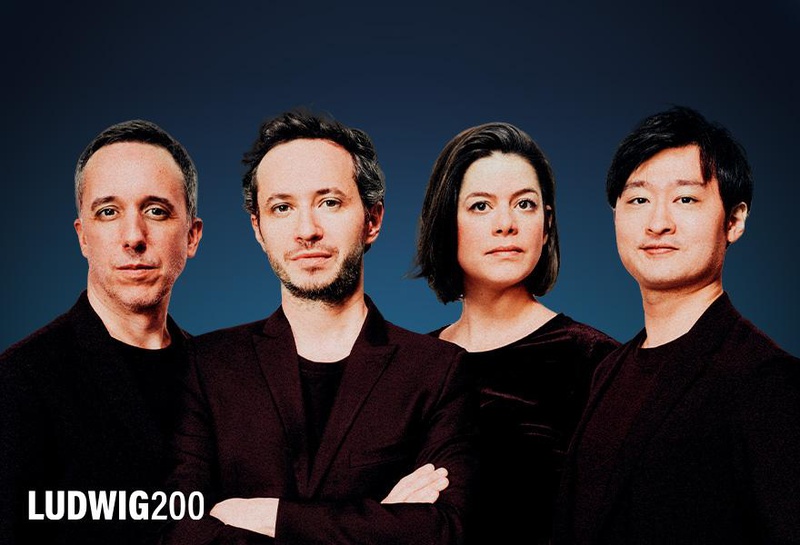
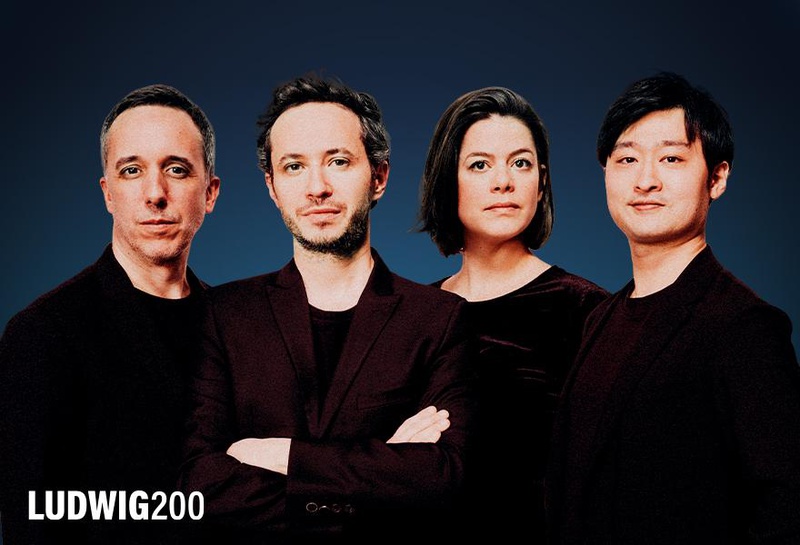
Hearing the complete Beethoven quartets is the experience of a lifetime for musicians and listeners alike. Having completed a first full cycle in 2020, the Quatuor Ébène returns to the task in its new line-up (Pierre Colombet, Gabriel Le Magadure, Marie Chilemme and Yuya Okamoto) for a series of seven exceptional concerts, marking the bicentenary of the German composer’s death.
Programme
LUDWIG VAN BEETHOVEN (1770-1827)
String Quartet No. 1 in F major Op. 18 No. 1
Interval
LUDWIG VAN BEETHOVEN (1770-1827)
String Quartet No. 13 in B-flat major Op. 130, with the “Great Fugue” Op. 133
Evgeny Kissin and Quatuor Ebene play: Shostakovich: Piano Quintet in G Minor, Op. 57: III. Scherzo
Find out more
A second encounter, like a musical vertigo. More than a quarter of a century separates the Quartet No. 1 from the famous ‘Grosse Fuge’. It would nevertheless be wrong to regard No. 1 as the modest effort of an inexperienced student, since Beethoven reworked the score several times, even writing to his friend Carl Amenda: ‘I have greatly altered it, for only now have I learnt how to write quartets properly’. Particularly remarkable, the slow movement is said to have been inspired by the tomb scene in Shakespeare’s Romeo and Juliet. A radical change of universe comes with the striking Quartet No. 13. Commissioned by the Russian Prince Galitzin, the work was considered unplayable by Beethoven’s contemporaries. Among its six movements, the heart-rending Cavatina stands out, written according to Beethoven ‘in the tears of sorrow’. The work also passed into posterity for its immense finale, which the publisher Artaria initially rejected because of its length and drama. This piece, renamed ‘Grosse Fuge’ Op. 133, can thus be played separately or as the conclusion of the Quartet No. 13, as the Ébène will do this evening. Let us simply recall, to convey the beauty of the work, that Igor Stravinsky described the ‘Grosse Fuge’ as ‘a miracle of perfection’ and ‘absolutely contemporary music that will remain contemporary forever’.